

Buying Guides
Attached Pool vs. Detachable Pool Water Slides
One gives you two products from one purchase. The other removes the joint that fails first. How to choose, and what each means for setup and cleanup.
By The WaterSlides4Kids Team · · Updated · 8 min read
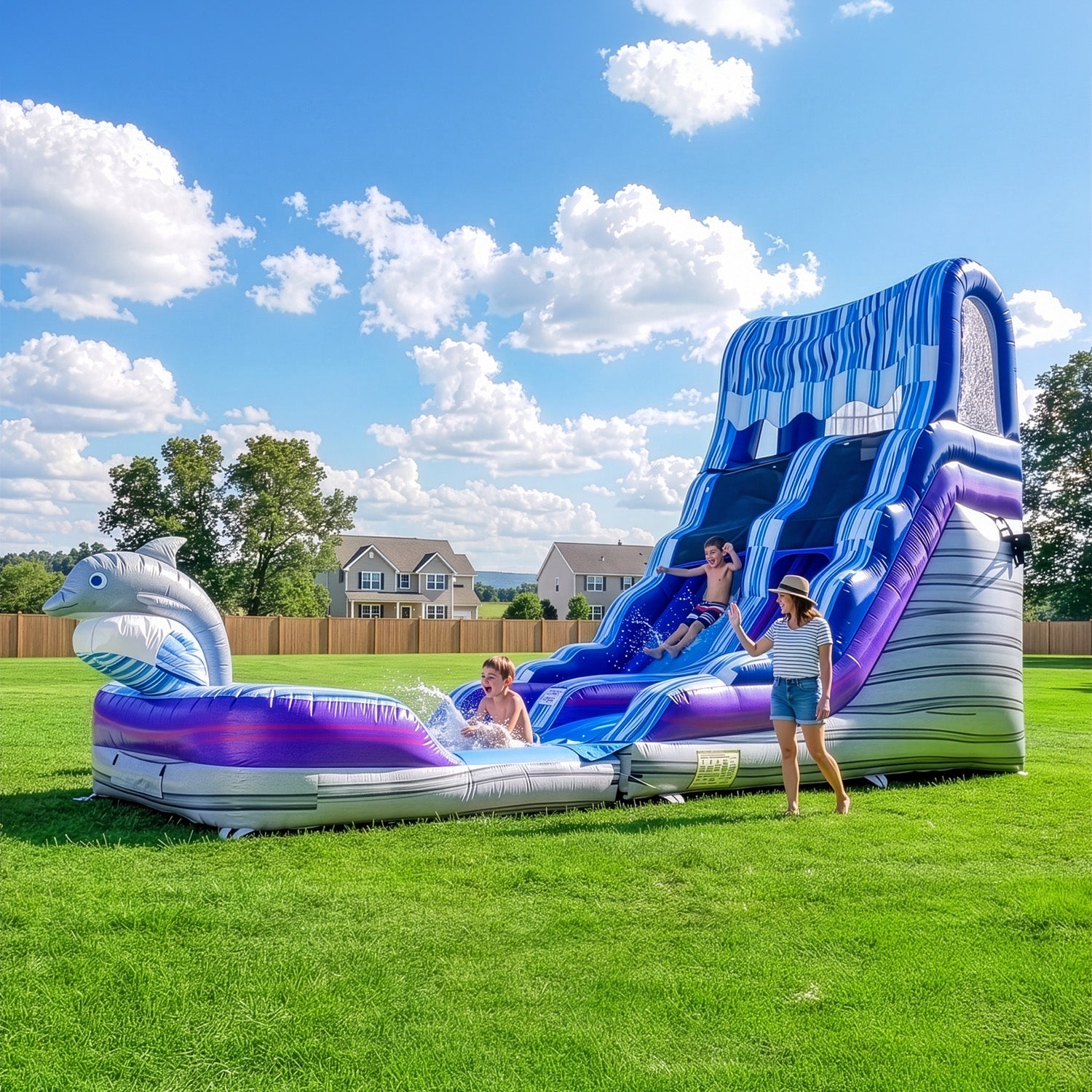
Two slides, same height, same lane count, same vinyl, same price. One has a pool that is part of the structure. The other has a pool that unclips.
This is a smaller decision than height or lane count, and it is the one buyers most often make by accident — usually by picking a theme they liked and inheriting whatever pool configuration came with it. It is worth thirty seconds of thought, because it determines how many months a year the slide is useful and which component fails first.
What each one actually is
An attached pool is a single continuous inflated chamber with the slide body. The basin fills with air at the same time as the lane and the climbing wall, from the same blower, through the same internal passages. There is no join because there is nothing to join.
A detachable pool is a separate section that fits to the base of the lane, usually with a zip-and-clip seam, and inflates through a connecting passage. Remove it and the slide runs dry onto a landing mat.
That structural difference produces every practical difference below.
The case for attached
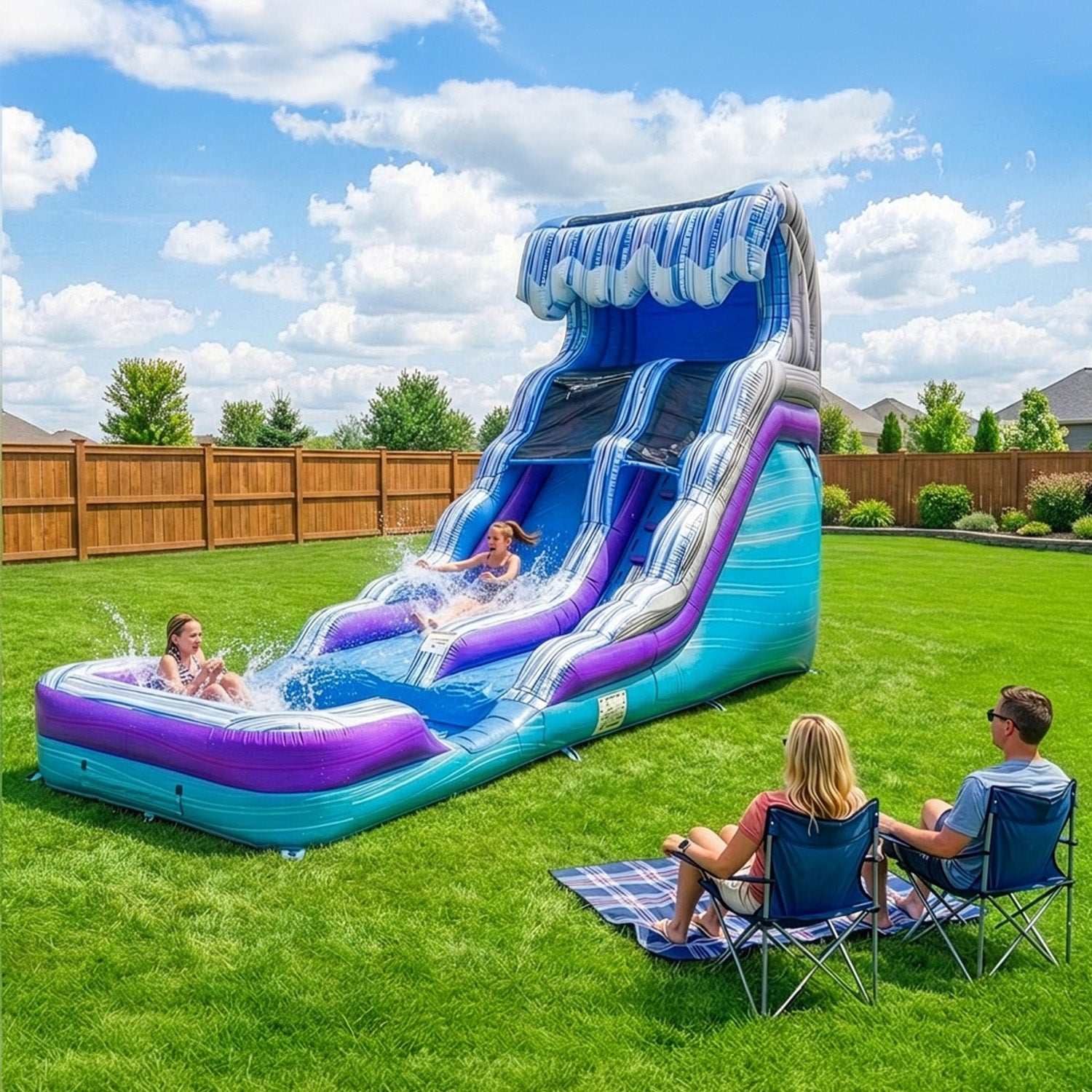
Setup speed. Nothing to align, nothing to assemble, nothing to leave in the garage. An attached-pool slide like the 16' Ocean Wave goes from bag to standing in three to four minutes. Detachable units add a couple of minutes and one more thing to get right.
Durability — and this is the real argument. The detach seam is the joint that takes stress every single time the pool is fitted and removed. After a few dozen cycles it is the first place a hard-used slide starts to weep. An attached pool has no such joint, which removes the most common leak point on an inflatable water slide entirely.
If your slide is going to live in a backyard and get used most weekends from June to September, that structural simplicity is worth more than the flexibility you are giving up.
One less thing to lose. Sounds trivial. Ask anyone who has arrived at a party and discovered the pool section is still on a shelf at home.
Controlled draining. Attached basins have a built-in drain plug. Site the unit so that plug faces downhill and the pool empties itself while you start drying the lane.
The case for detachable
It buys you a second product. This is the whole argument, and it is a strong one. Take the pool off and the slide runs dry onto a landing mat: indoor events, autumn festivals, school gym days, birthday parties in October. For a family that is two or three extra months of use every year from the same purchase. For a rental operator it is a second listing at no additional inventory cost — same storage footprint, same truck load, roughly double the bookable calendar.
Younger kids stop parking in the water. A specific and slightly unexpected benefit. On slides aimed at four- to seven-year-olds, the splash basin is where small children sit and play rather than climbing back up. Removing it on cooler days keeps them cycling through the slide instead.
Easier to dry the components separately. Two smaller pieces in moving air can dry faster than one large one, which matters more than it sounds when you are trying to pack down before dark.
Deep pools at height. Above about seventeen feet, riders arrive fast enough that a deep pool is doing genuine deceleration work rather than just being wet. Detachable deep pools — as on the 17' Surf Beach — let you have that depth in summer and remove it entirely for dry operation, which is safer than leaving an empty deep basin at the bottom of a slide.
Side by side
| | Attached pool | Detachable pool | | --- | --- | --- | | Setup time | 3–4 minutes | 4–6 min (deep pools: 10–12) | | Assembly steps | None | One | | Detach seam | None | Yes — inspect each season | | Dry operation | No | Yes | | Components to store | One | Two | | Best for | Summer-only backyard use | Year-round use, rental fleets |
Cleanup and draining
Attached. Pull the drain plug at the low corner and let gravity do it while you start on the lane. This is why siting matters: if the plug corner is uphill you will be pushing several hundred gallons around with a broom. Once drained, sponge or squeegee the residual water out of the basin.
Detachable. Drain the pool fully before separating it, then take it off and drain any residual water by lifting one edge. Never attempt the swap with the blower running, and never with water still in the basin — that is how detach seams get damaged. On a shallow splash basin budget ninety seconds; on a deep pool budget five minutes and two people.
Either way, the basin is where debris collects — grass, leaves, sand off feet. Rinse it out rather than letting it dry in, because dried-on organic matter is exactly what mildew starts from.
Storage and transport
A detail that only matters once, but matters every time after that.
An attached-pool slide packs down as one larger roll. A detachable unit packs as two smaller pieces. Most people find the single roll easier to handle despite its size, because there is nothing to keep track of and the storage bag that shipped with the unit is sized for exactly one thing.
Two pieces are easier to lift individually and easier to fit around awkward storage, which is a genuine advantage if your shelf space is irregular or if one person is loading the unit alone. It is also two things to remember, and the pool section is the one that gets left behind.
For rental operators the calculation flips slightly: two pieces load into a van more flexibly than one long roll, and being able to leave the pool section at the warehouse when a booking is dry is a real weight saving on the vehicle.
Which one fails first, and why
Neither, if you dry the unit properly. Mildew from damp storage is the leading cause of failure on inflatables regardless of pool type, and it dwarfs every other cause. The cleaning and storage routine is the single highest-value habit an owner can build.
That said, if a slide is going to develop a problem from use rather than neglect:
- On an attached unit it is most likely the lane surface or an anchor point — the areas taking the most friction and load.
- On a detachable unit it is most likely the detach seam, particularly on deep pools where the joint carries more water weight.
Inspect the detach seam at the start of each season and after any event where the unit was struck in a hurry. It is not fragile, but it is the part that tells you first if the unit has been handled roughly.
How to choose
Choose attached if:
- The slide is for your own backyard, used mainly in summer.
- Setup speed matters — you want it up before the first guest parks.
- You would rather have fewer parts and fewer things to inspect.
- Your riders are young and a fixed, predictable landing basin is a feature.
Choose detachable if:
- You want use beyond the wet season — indoor birthdays, school events, autumn festivals.
- You are buying to rent and want two listings from one unit.
- Your riders are older or heavier and a deep pool is worth having in summer.
- You want the option of running dry on cooler days.
The 16' Dolphin and the Ocean Wave are a useful direct comparison: same height class, same single wide lane, same 15oz commercial vinyl, same price. The only real difference is the pool philosophy, and it genuinely is the entire decision.
What about combos?
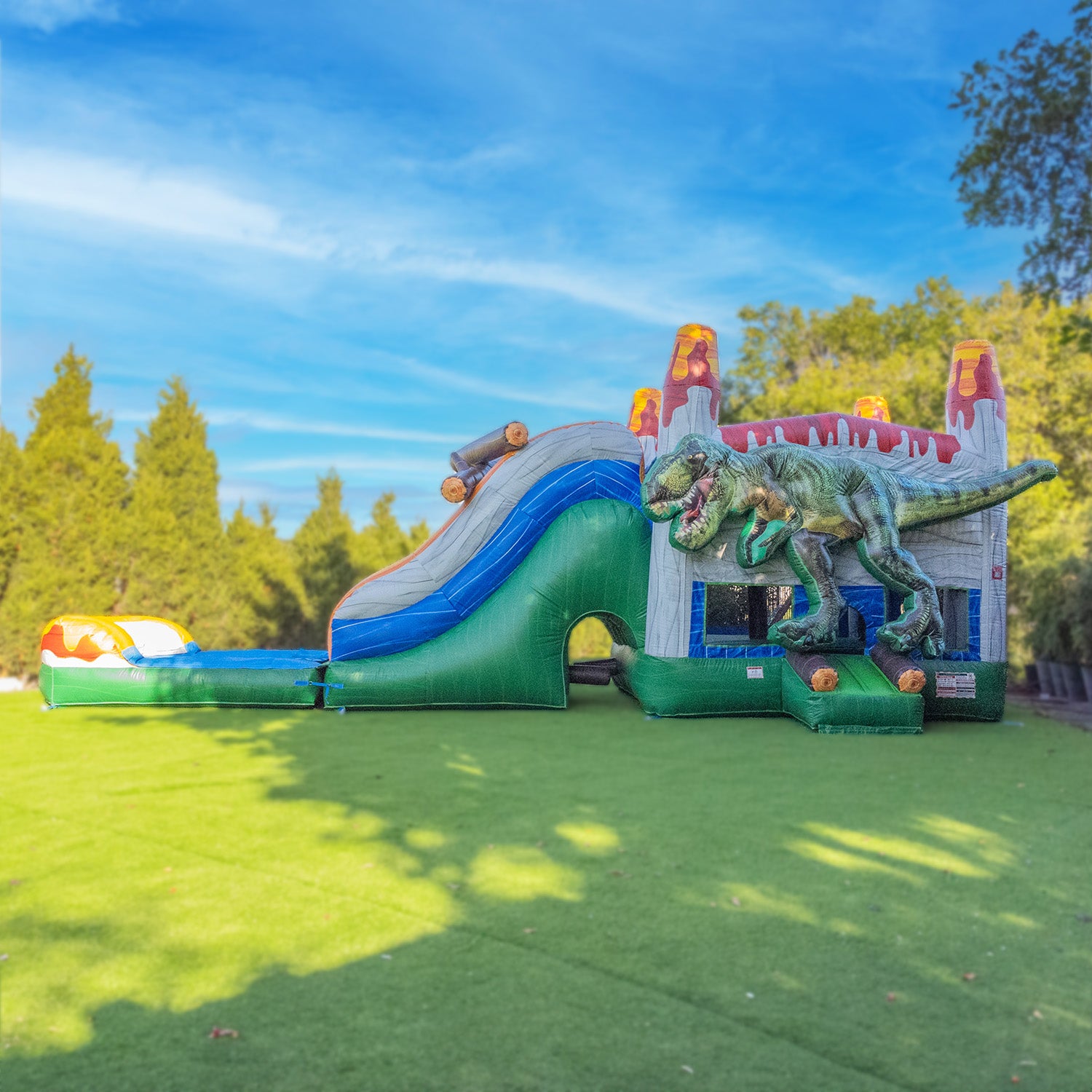
Wet/dry combo units add a third option. Something like the T-Rex wet/dry combo has a detachable deep pool, which gives three distinct configurations: dry bounce house with the slide roped off, dry bounce plus dry slide onto a mat, and the full wet setup.
That is three products from one storage bag, and it is why the deep-pool combos command a premium over the fixed splash-basin models.
One caution: an empty deep pool left attached during dry operation is a trip hazard at the base of a slide. If you are running dry, take it off properly rather than just turning the hose off.
The short version
Attached pools are simpler, faster and structurally more durable — fewer parts, no detach seam, no assembly. Detachable pools are more versatile and turn one purchase into two products.
For a summer-only backyard slide, attached is very often the better engineering choice. For anyone who wants the unit earning in October, or who is renting it out, detachable pays for the extra seam.
Compare both across our range on the shop page, where you can filter by pool type — or read the buyer's guide if height and lane count are still open questions.
Quick answers
Frequently asked
Is a detachable pool better than an attached pool?
Neither is better in the abstract. Detachable buys you dry-season use; attached removes the detach seam, which is the most common leak point, and sets up faster.
How long does it take to detach a water slide pool?
About 90 seconds for a shallow splash basin on a single lane. Budget five minutes and two people for a deep pool, and drain it fully before separating.
How do you drain an attached water slide pool?
Through the built-in drain plug. Site the slide so the plug corner faces downhill and the basin empties itself while you start drying the lane.
Mentioned in this guide
Slides Worth a Look
- In Stock
Dolphin 16' Water Slide with Detachable Pool
Half off MSRP, sixteen feet, and a pool that unclips for dry season
 In Stock
Ocean Wave 16' Water Slide with Attached Pool
One chamber, one blower, zero assembly — the simplest 16-footer we sell
 In Stock
T-Rex Dinosaur Wet & Dry Bounce House with Slide and Detachable Deep Pool
Dinosaurs, a bounce house, and a deep pool that comes off entirely
About the author
The WaterSlides4Kids Team
We sell commercial-grade inflatable water slides, which means we spend a lot of time answering the same questions about vinyl weight, blower sizing, yard measurements, and what actually breaks first. These guides are those answers, written down.
More about usKeep reading
More Guides
- Do You Need a Permit for an Inflatable Water Slide? US State-by-State OverviewWhere permits typically apply, how private backyard use usually differs from commercial operation, and how to check your own jurisdiction properly.
- How to Clean, Dry, and Store an Inflatable Water Slide So It Lasts 10 YearsTwenty minutes of drying is the difference between three seasons and ten. The full end-of-day routine, plus mildew rescue and off-season storage.
- Inflatable Water Slide Safety: The Complete Setup & Supervision ChecklistSite selection, anchoring, wind limits, rider rules and supervision ratios — the checklist to run before anyone climbs, and the conditions that mean shutting down.