

In Stock
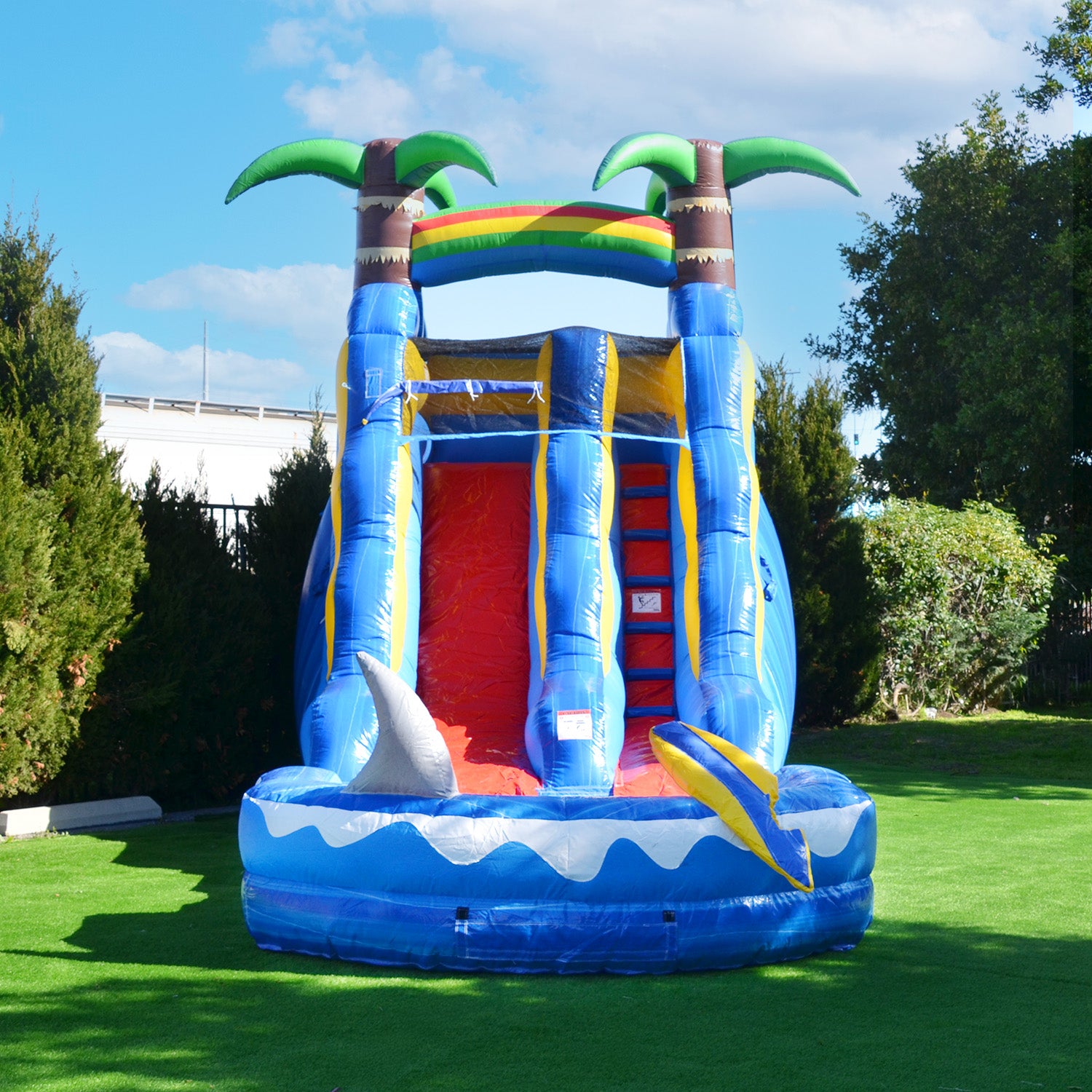
15' Ocean Shark Water Slide with Detachable Pool
A shark with its mouth open at the top of the ladder. Kids lose their minds.
The slides that actually fit a normal yard
Every slide in this collection is sized for a residential lot: compact footprints, modest overhead clearance, single-blower power, and setup times measured in minutes. No trailer, no crew, no second circuit.
6 slides in this collection
A shark with its mouth open at the top of the ladder. Kids lose their minds.
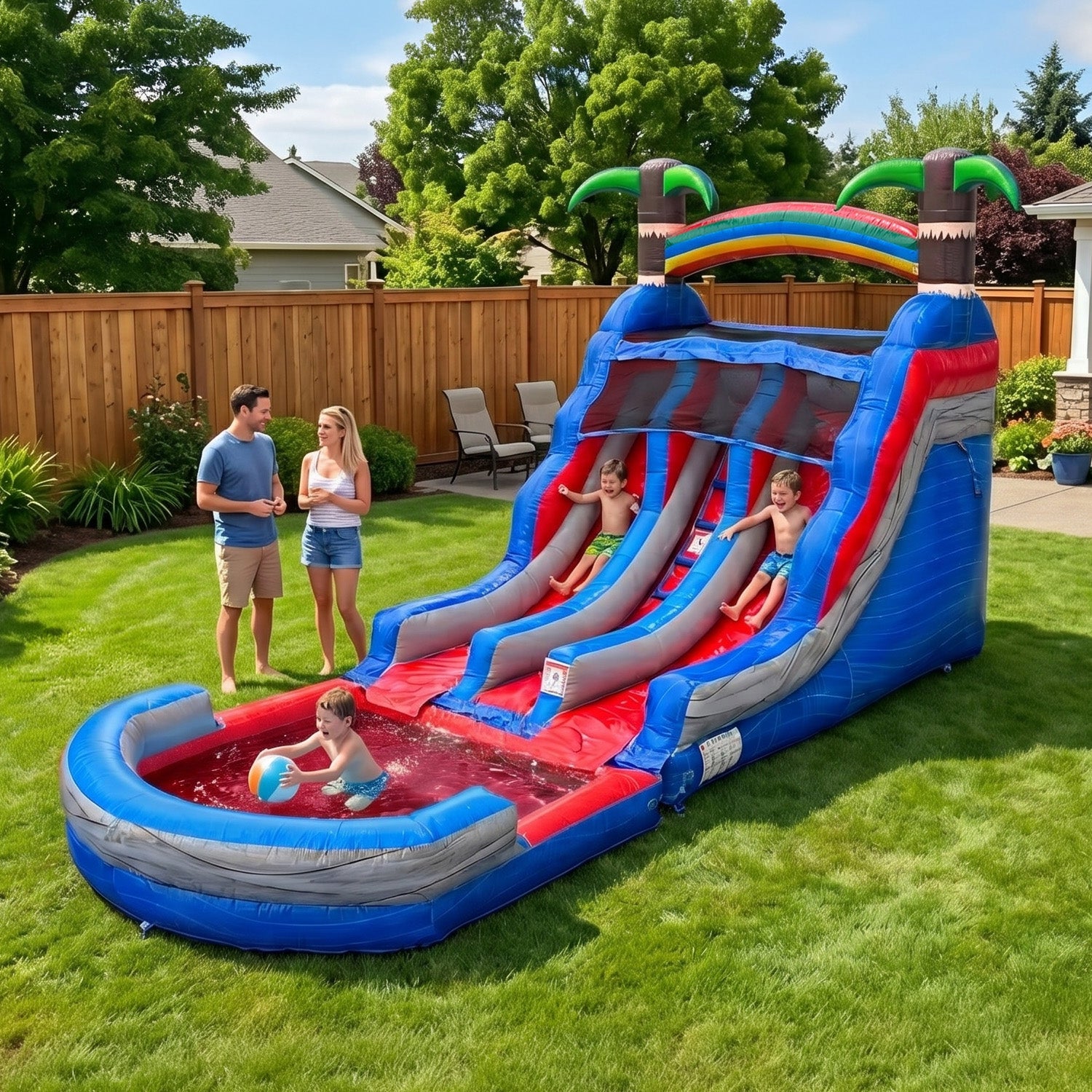
Racing lanes for younger riders — dual lane without the height
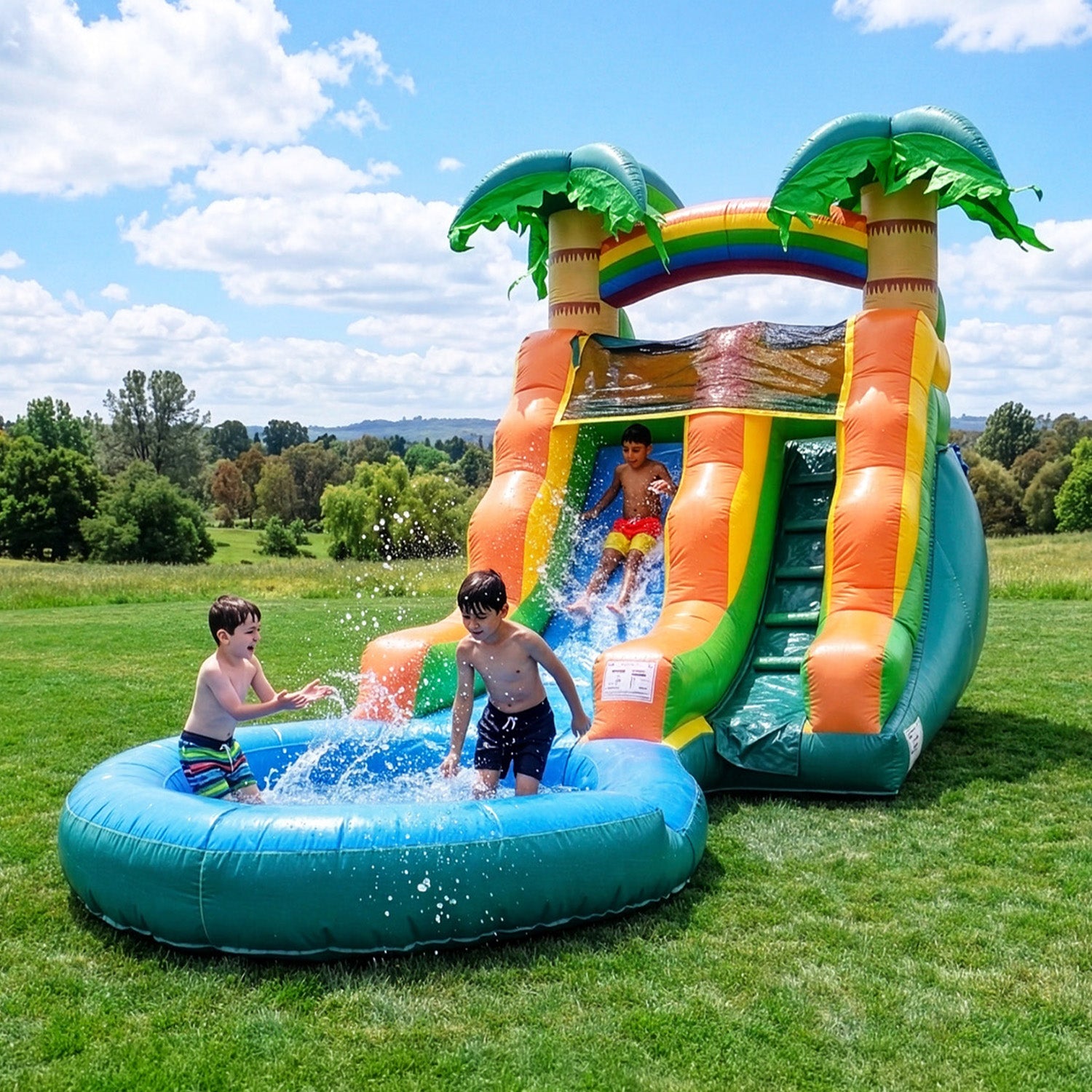
Commercial vinyl at a big-box price — the entry point that is not a compromise
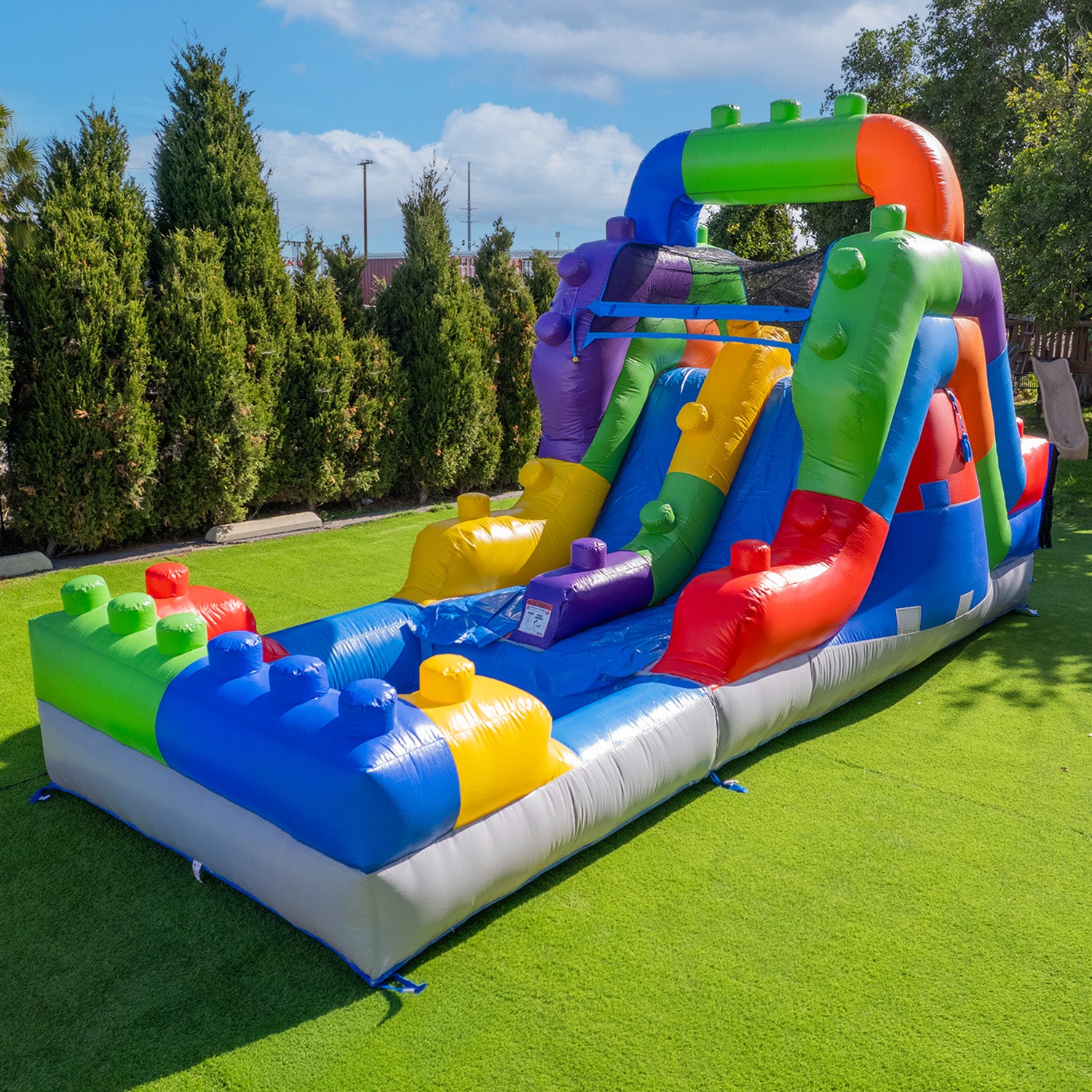
Backload climbing wall — riders go up the back, so nobody crosses the lanes
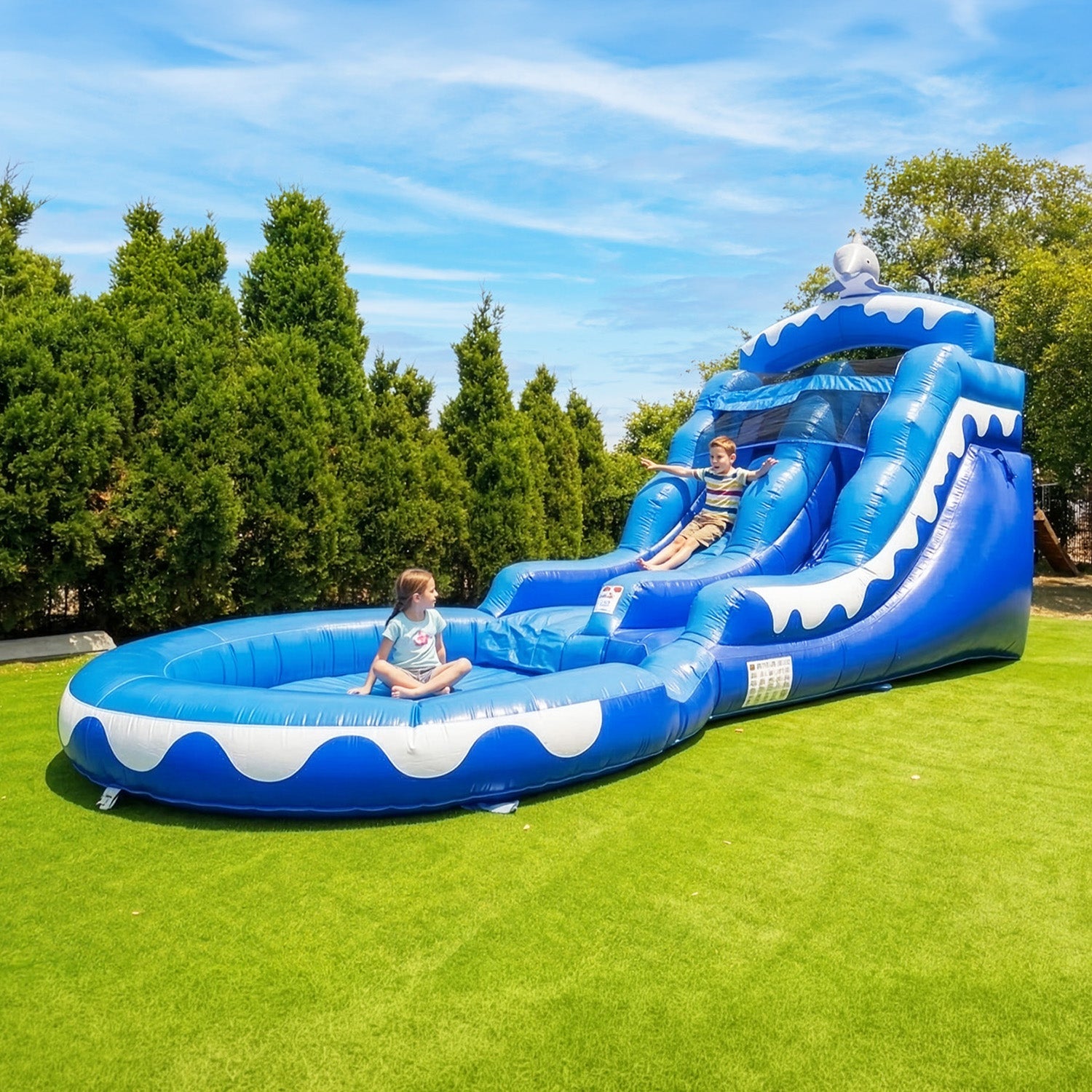
The little sibling of our 16-footer, scaled for the four-to-eight crowd
Call for Availability
View details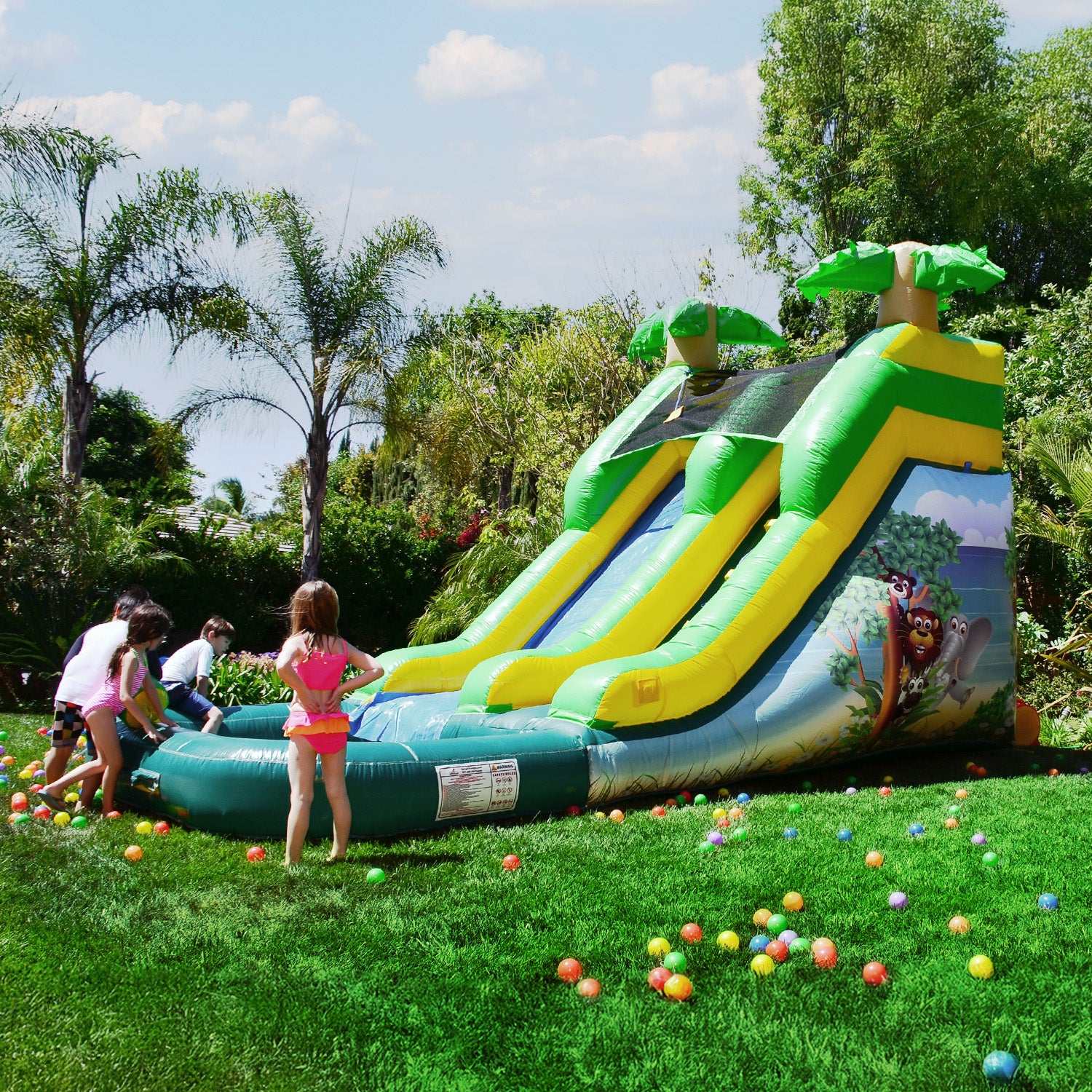
Giraffes, zebras, and a twelve-foot drop built for the smallest riders
Call for Availability
View detailsIt is not height alone. A backyard slide is one where all four practical constraints line up: it fits the ground you have, it clears whatever is above it, it runs off a single household circuit, and one adult can set it up alone in a few minutes. A slide that fails any one of those is a commercial unit that happens to be short.
Overhead clearance is the constraint that disqualifies most residential sites, and it is the one nobody checks. Mature trees, gutters, floodlights, and the overhead service drop from the street all occupy the airspace a slide needs. Every unit in this collection tops out at fifteen feet or under, which clears the majority of suburban tree lines — a 19-foot flagship needs close to twenty-five feet of clear sky and simply will not go up on most lots.
Power is the second quiet constraint. The larger slides in our catalogue need two blowers on two separate circuits, which in a typical house means running a cable to a different room. Everything here runs on one blower and one outlet.
Take the recommended clear footprint from the product page and add walking room on all sides — you need to get around the unit to stake it, to supervise, and to reach the drain plug. Then check the ground is level. A slope you cannot see by eye will make one lane of a racer faster than the other and will pool water at one end of the landing basin.
Then look up, and look up from where the slide will actually stand rather than from the patio. Branch spread looks very different from underneath. If a limb is within a couple of feet of the inflated height, either trim it or size down — a slide that rubs against a branch every time it shifts in the wind will wear through the vinyl long before the seams give out.
Finally, work out where the water goes. Every landing pool drains, and a few hundred gallons has to end up somewhere that is not your neighbour’s lawn or your own foundation. Site the unit so the drain plug faces downhill toward a soakaway or a drain.
Grass is the preferred surface because you can stake into it, and staking is not optional. Every unit here ships with stakes and tether ropes and they are the difference between an inflatable and a very large kite — a moderate gust under an unanchored slide will move it, with children inside.
On a hard surface, stakes are replaced by sandbags or ballast at every anchor point, plus a protective tarp underneath to keep the vinyl off abrasive concrete. A tarp is worth putting down on grass too: it keeps the base clean, which matters more than it sounds on the pale-coloured units, and it makes drying and packing away considerably faster.
The most common mistake in this category is buying taller than the household will use. A 15-foot slide is more impressive than a 13-foot one and it is also a longer climb, and for a five- or six-year-old the climb is work. Parents consistently report the same pattern: the taller slide gets ridden a handful of times and abandoned, the shorter one runs all afternoon.
Match the height to your youngest regular rider. If your children are four to eight, a 12ft or 13ft unit is very likely the right purchase and the money you did not spend buys several more summers of use. If they are already nine or ten, size up to 15ft — they will outgrow anything shorter within a season or two.
The one genuine exception is a household with a wide age spread. In that case a dual-lane 13-footer, or a wet/dry combo, covers more of the range than any single-lane slide at any height, because there is more than one thing to do.
Nothing in this collection is a lightweight consumer product. These are the same 15oz commercial PVC panels and quadruple-stitched seams as the units rental companies run forty weekends a year, in smaller frames. A big-box inflatable at a superficially similar price is typically 6 to 9oz vinyl designed for around twenty uses.
That distinction is the whole argument for buying a commercial-grade slide for domestic use. A cheap slide replaced every second summer costs more over five years than a good one bought once, and it tends to fail at a seam, mid-party, with a garden full of children waiting. Buy once, dry it properly before it goes in the bag, and a backyard slide will outlast the children it was bought for.
Call (555) 010-2025 and we will talk it through — or read the full inflatable water slide buyer’s guide, which covers height, lanes, pool type and vinyl weight in order.
Common questions
A 12ft to 15ft unit fits most suburban lots. Check the recommended clear footprint on the product page, add walking room on all sides, and confirm overhead clearance before you order.
Yes, with sandbags or ballast at every anchor point instead of stakes, and a tarp underneath to protect the vinyl. Never operate an unanchored inflatable on any surface.
A slide left up for several days will yellow the grass underneath, and the constant water will saturate the ground. Move it between uses where you can, and put a tarp down.
Not for these units — every slide in this collection runs on a single blower from a standard household outlet. Give it its own outlet rather than sharing with a sound system.
Keep browsing