

In Stock
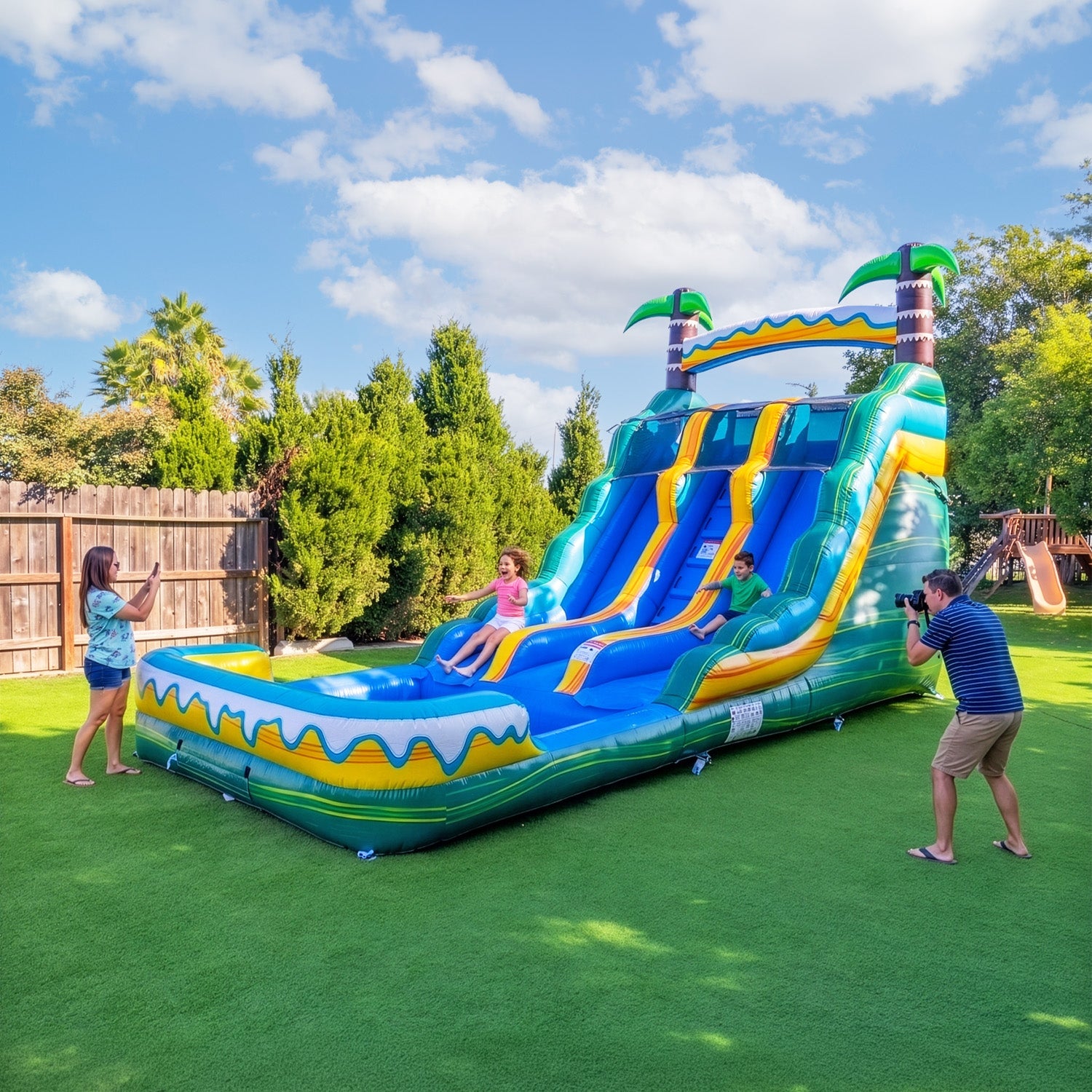
Tropical Breeze 15' Dual Lane Water Slide
Two lanes, one winner — the racing slide that ends every argument
Every slide we carry, from a 12ft first slide to a 19ft flagship
This is the full range — single lane and dual lane, attached pools and detachable pools, twelve feet up to nineteen. Every unit is built from 15oz commercial PVC vinyl and ships with a blower and free shipping sitewide.
20 slides in this collection
Two lanes, one winner — the racing slide that ends every argument
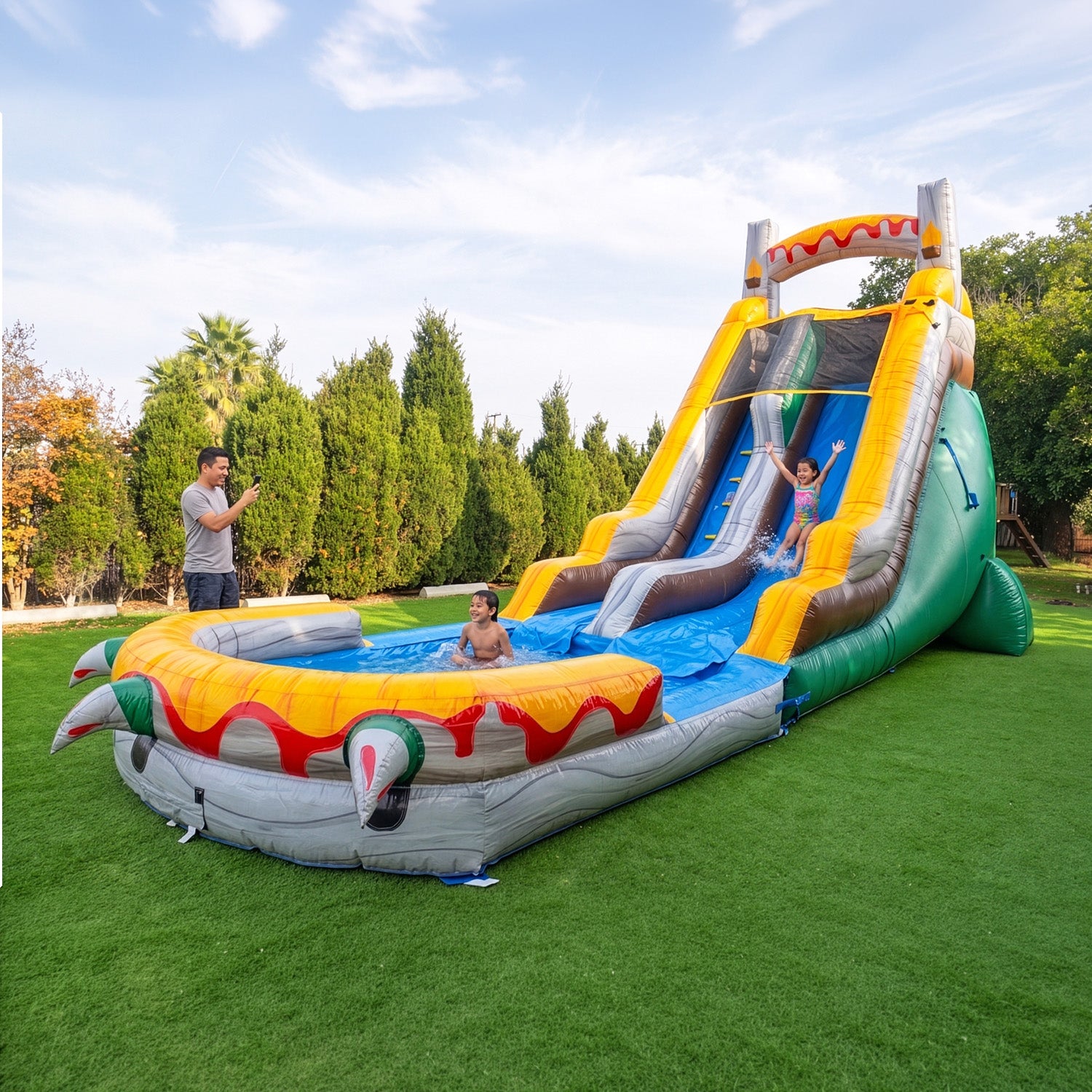
Eighteen feet of dinosaur, with a pool that comes off for dry days
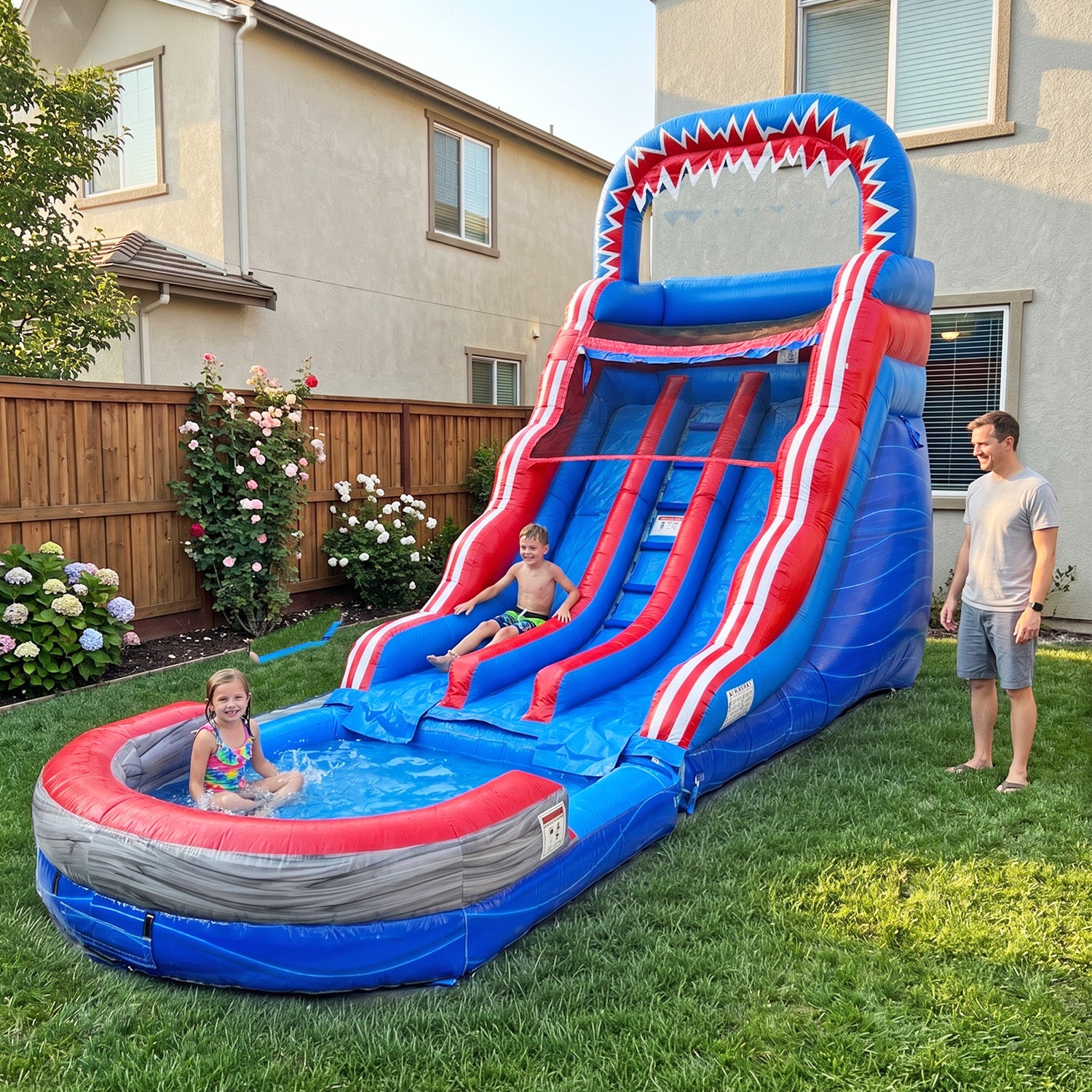
Dual lane, detachable pool, 17 feet — the most slide per dollar we sell
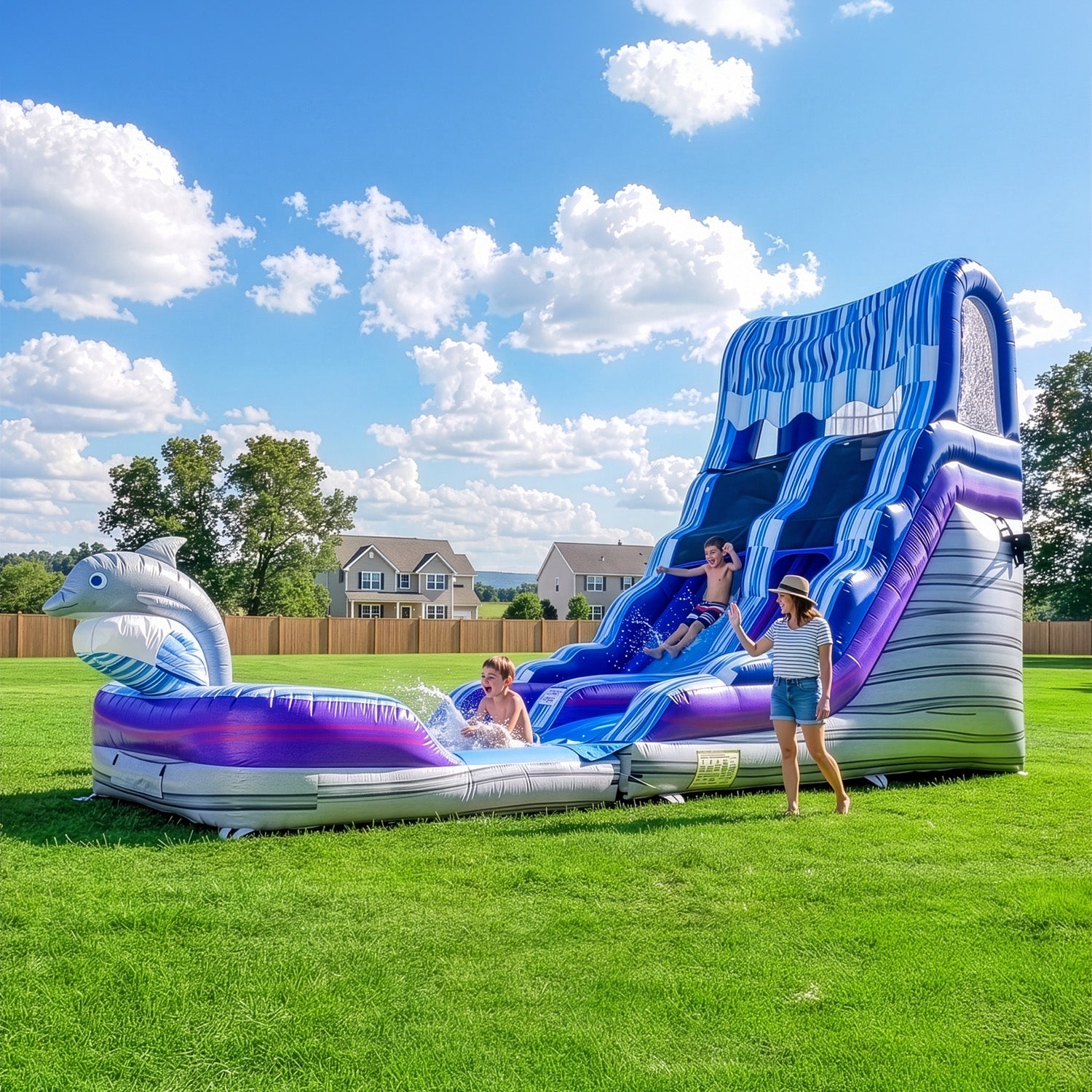
Half off MSRP, sixteen feet, and a pool that unclips for dry season
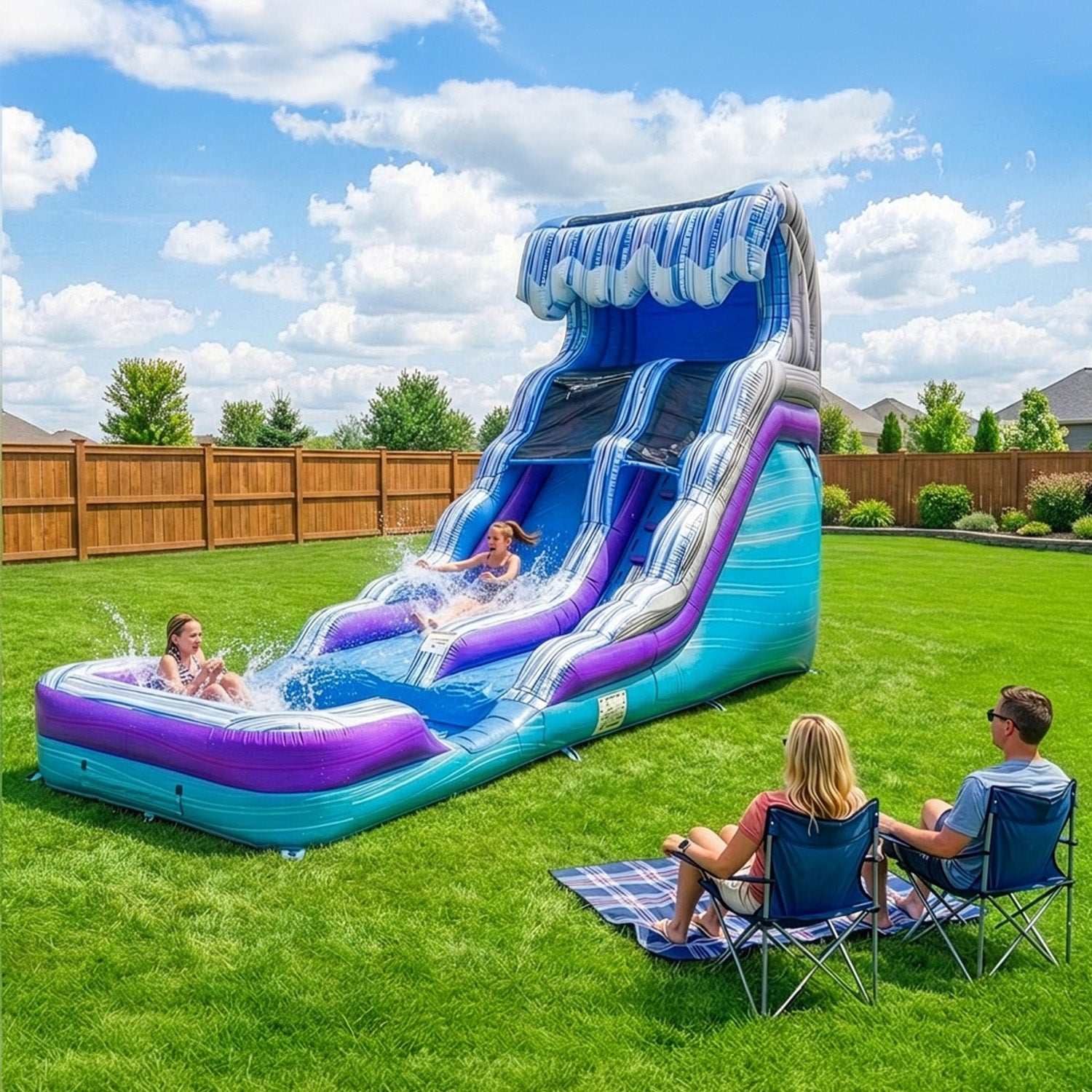
One chamber, one blower, zero assembly — the simplest 16-footer we sell
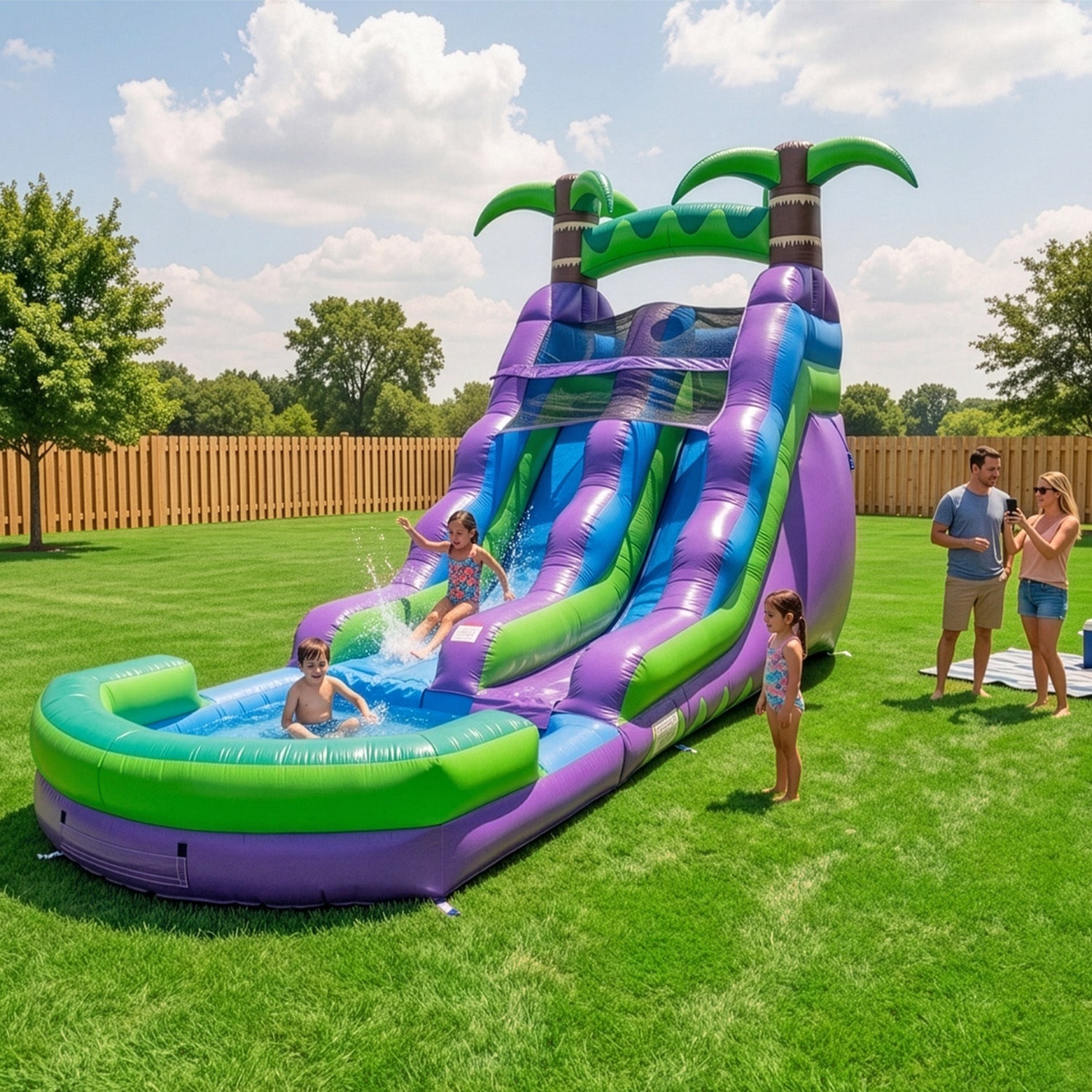
The one that photographs best — purple, teal, and impossible to ignore
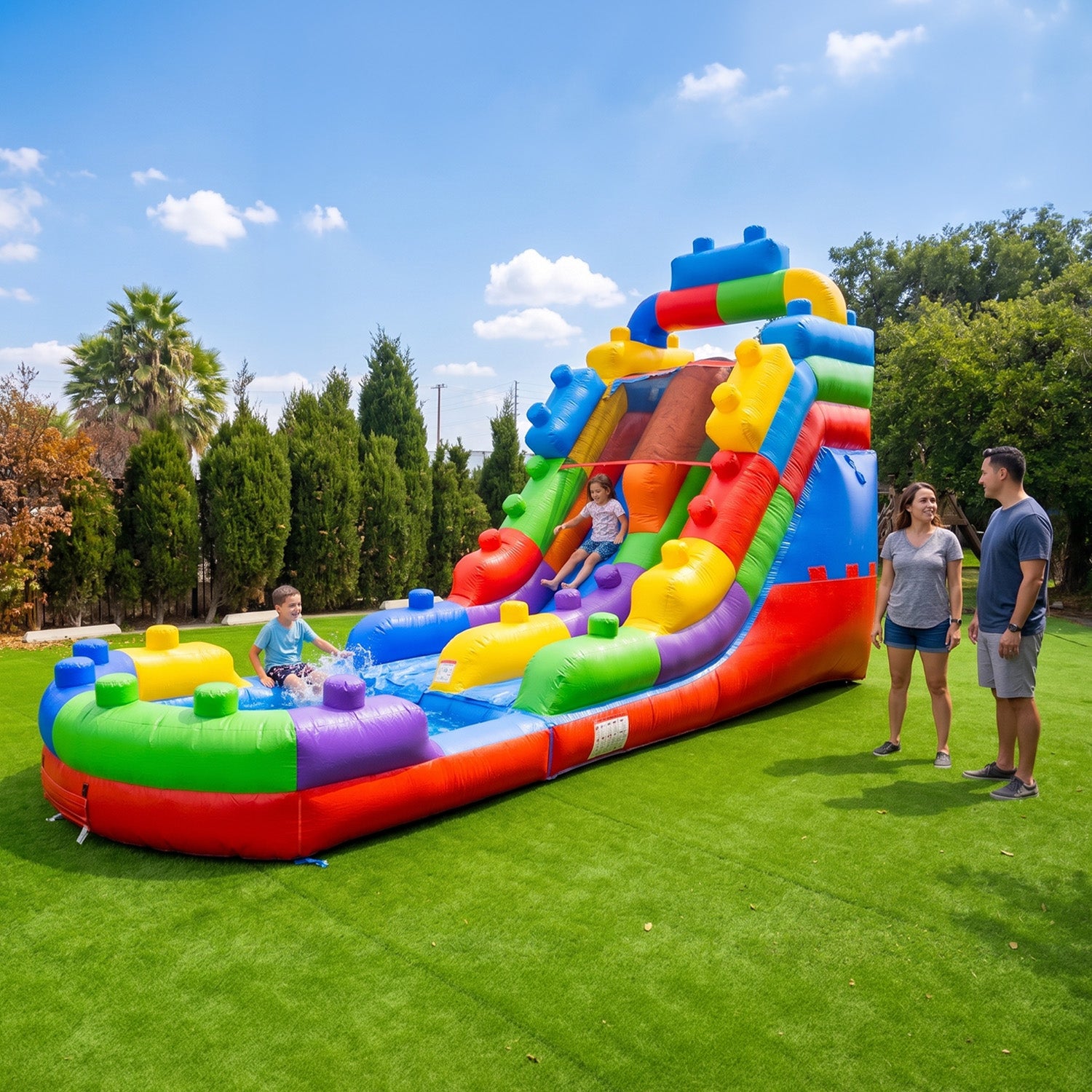
Primary colors, block-party energy, and the shortest setup in the range
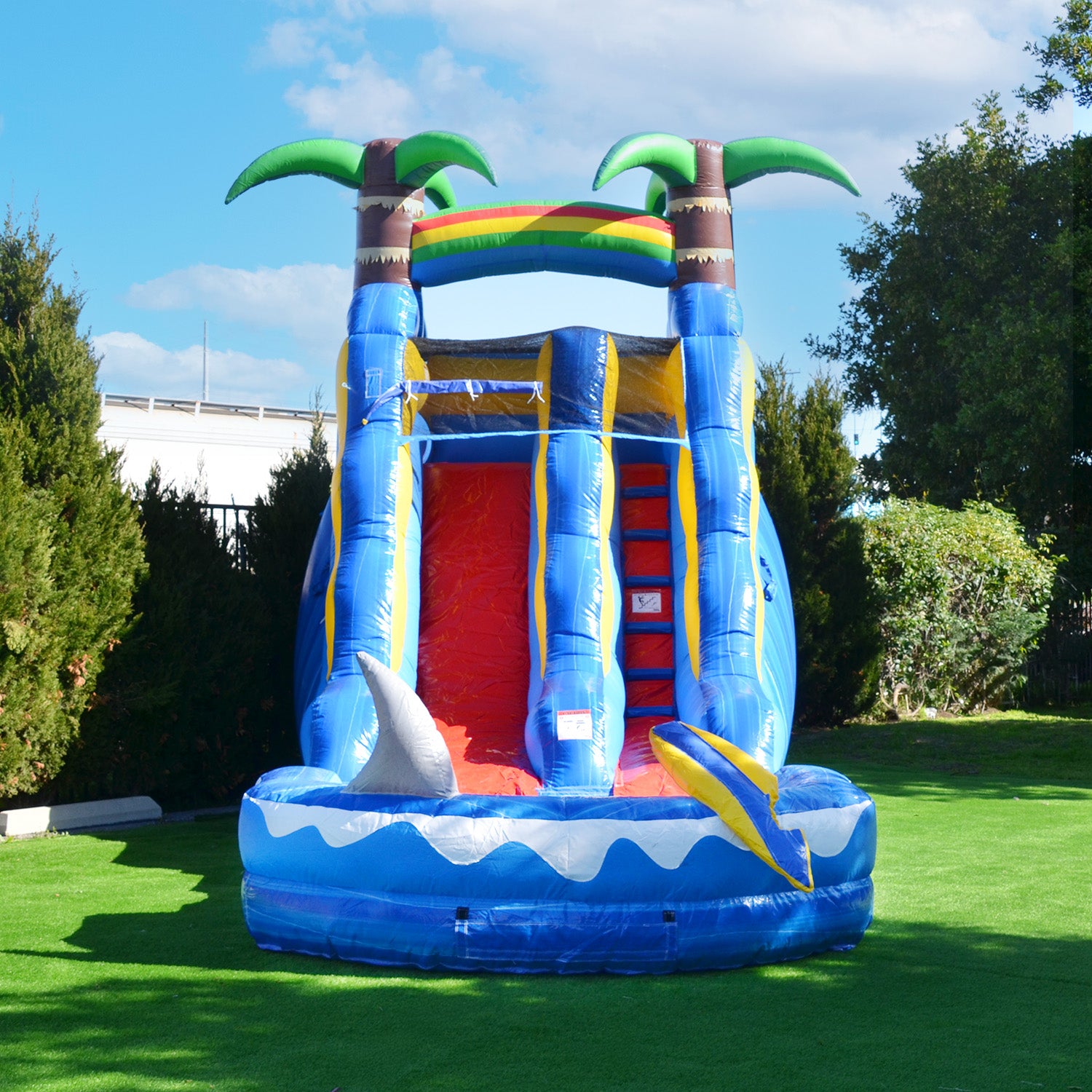
A shark with its mouth open at the top of the ladder. Kids lose their minds.
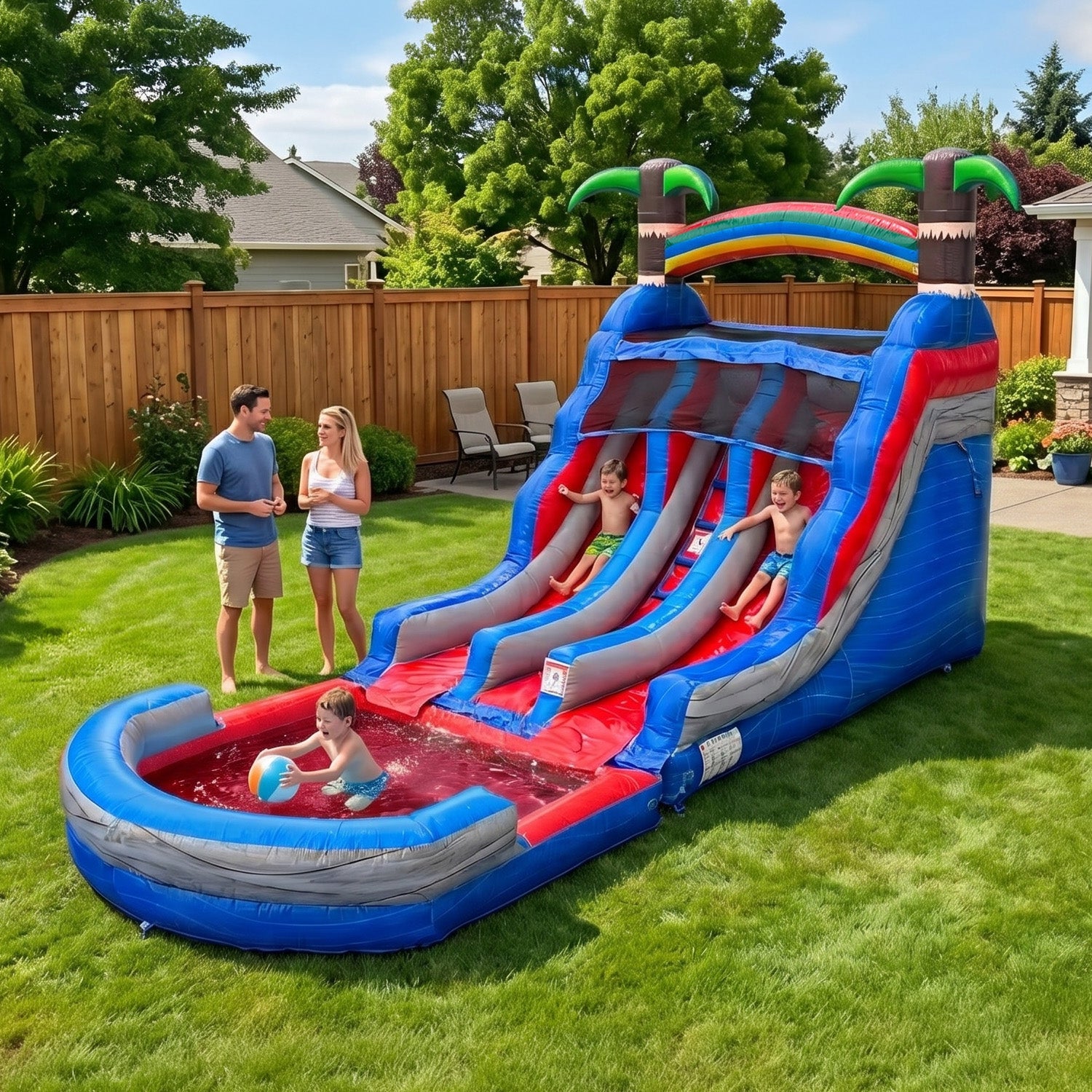
Racing lanes for younger riders — dual lane without the height
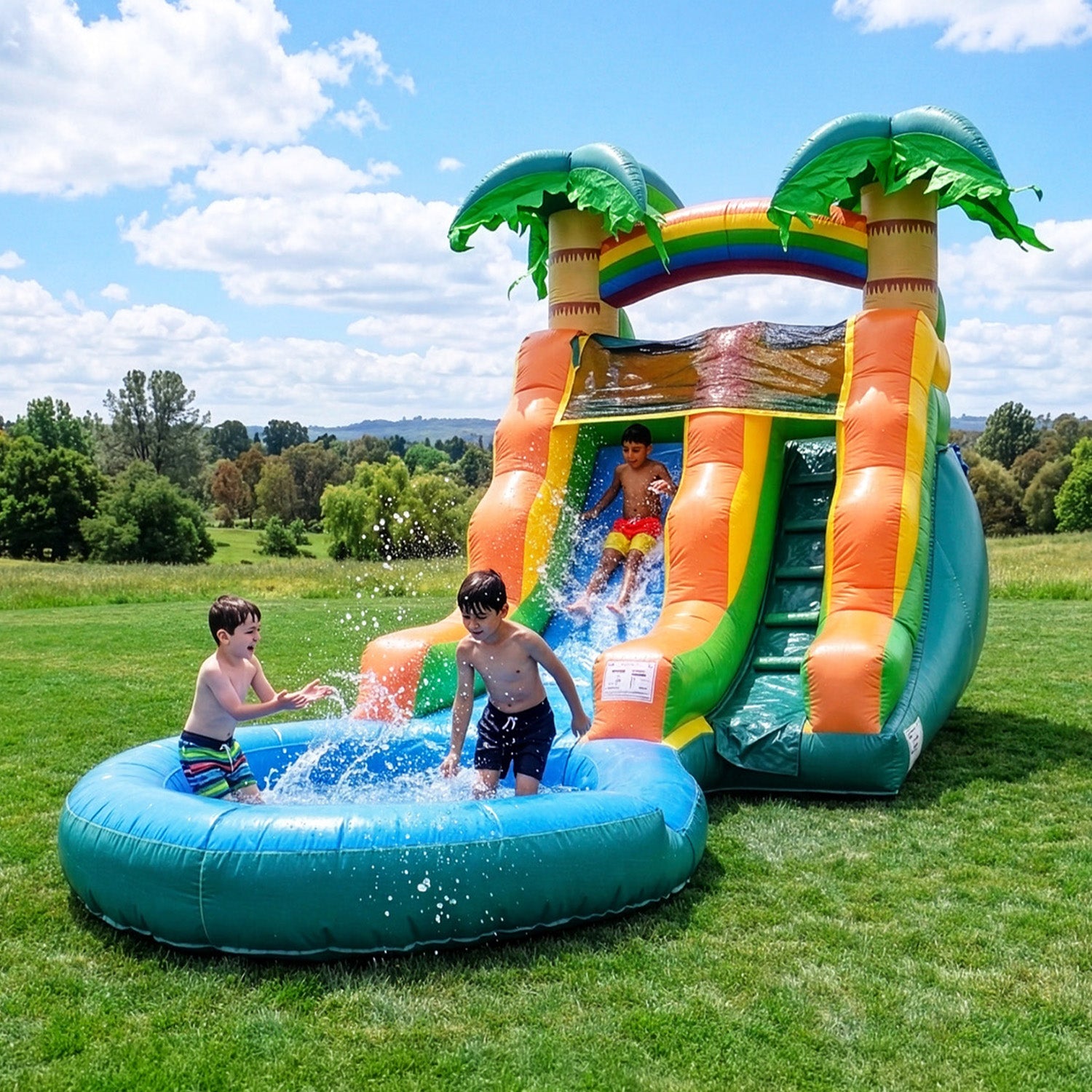
Commercial vinyl at a big-box price — the entry point that is not a compromise
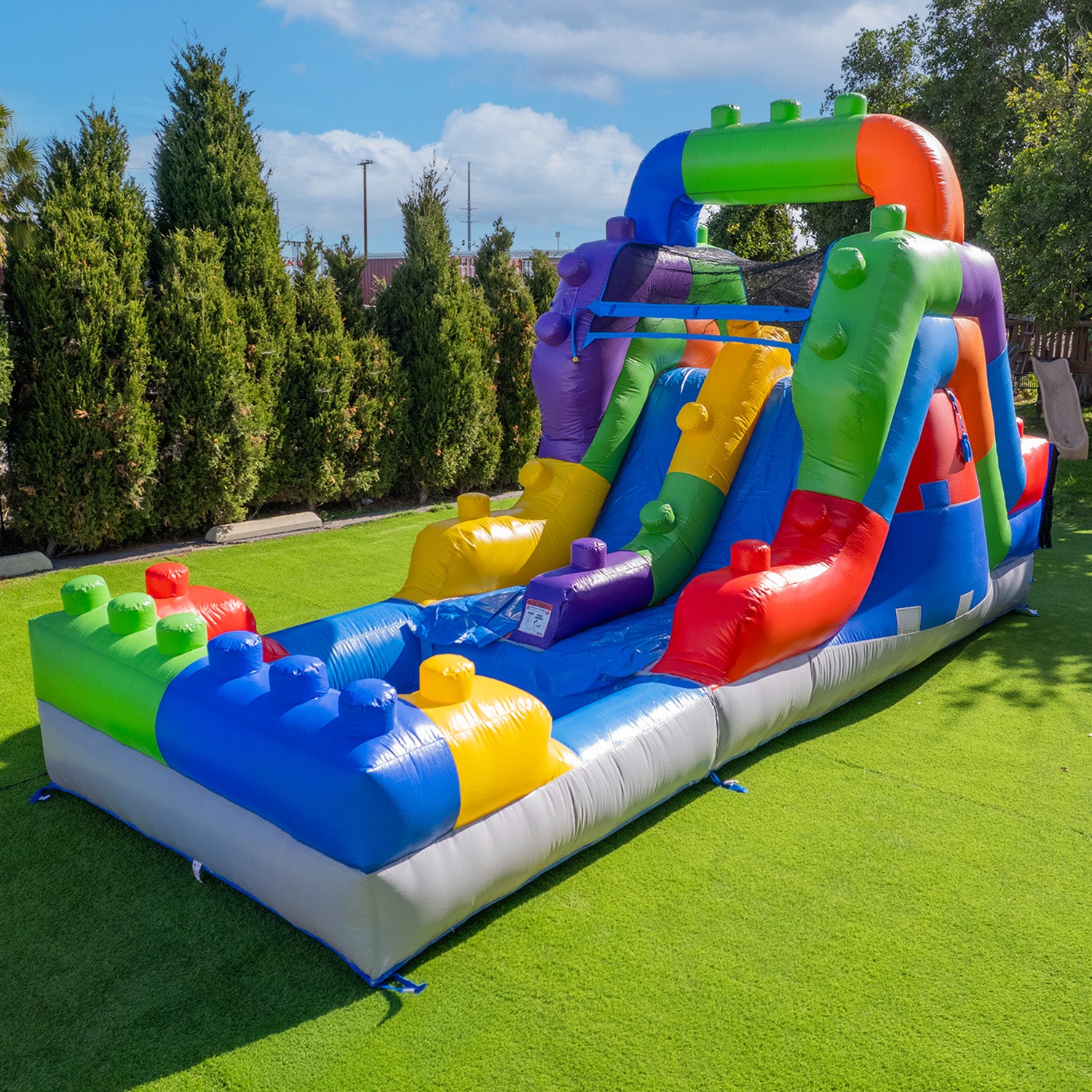
Backload climbing wall — riders go up the back, so nobody crosses the lanes
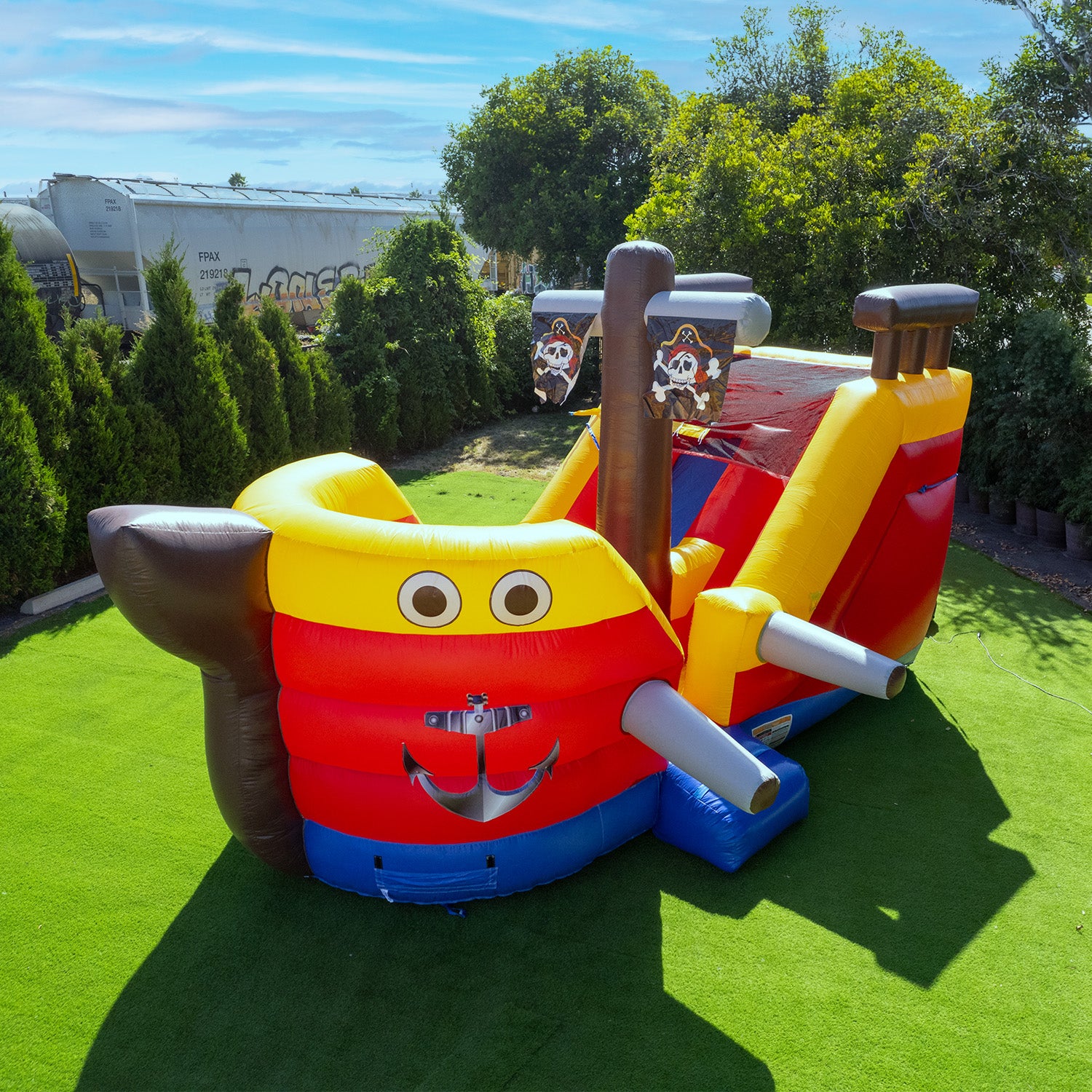
A whole ship, not just a slide — masts, cannons, and a plank to slide off
Call for Availability
View details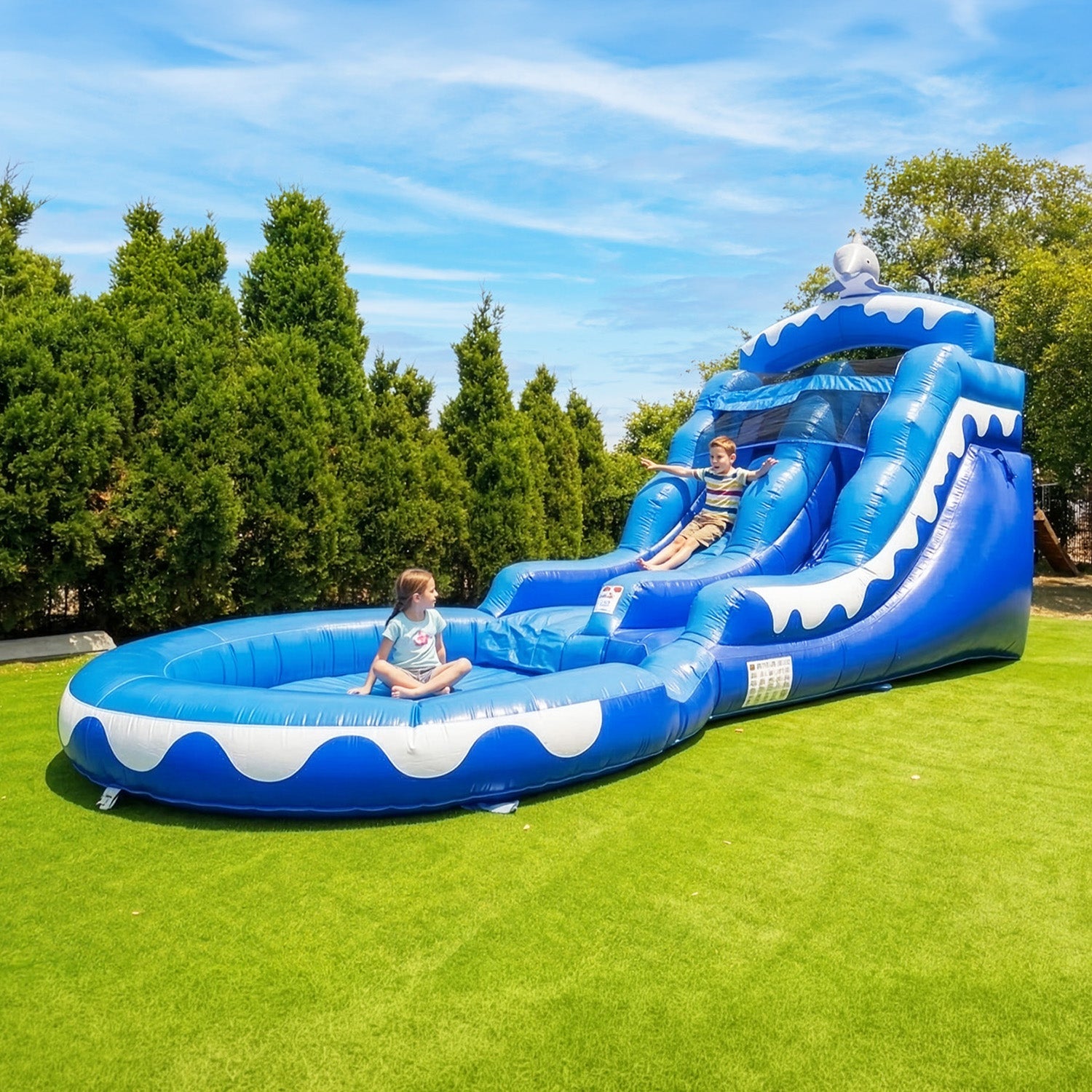
The little sibling of our 16-footer, scaled for the four-to-eight crowd
Call for Availability
View details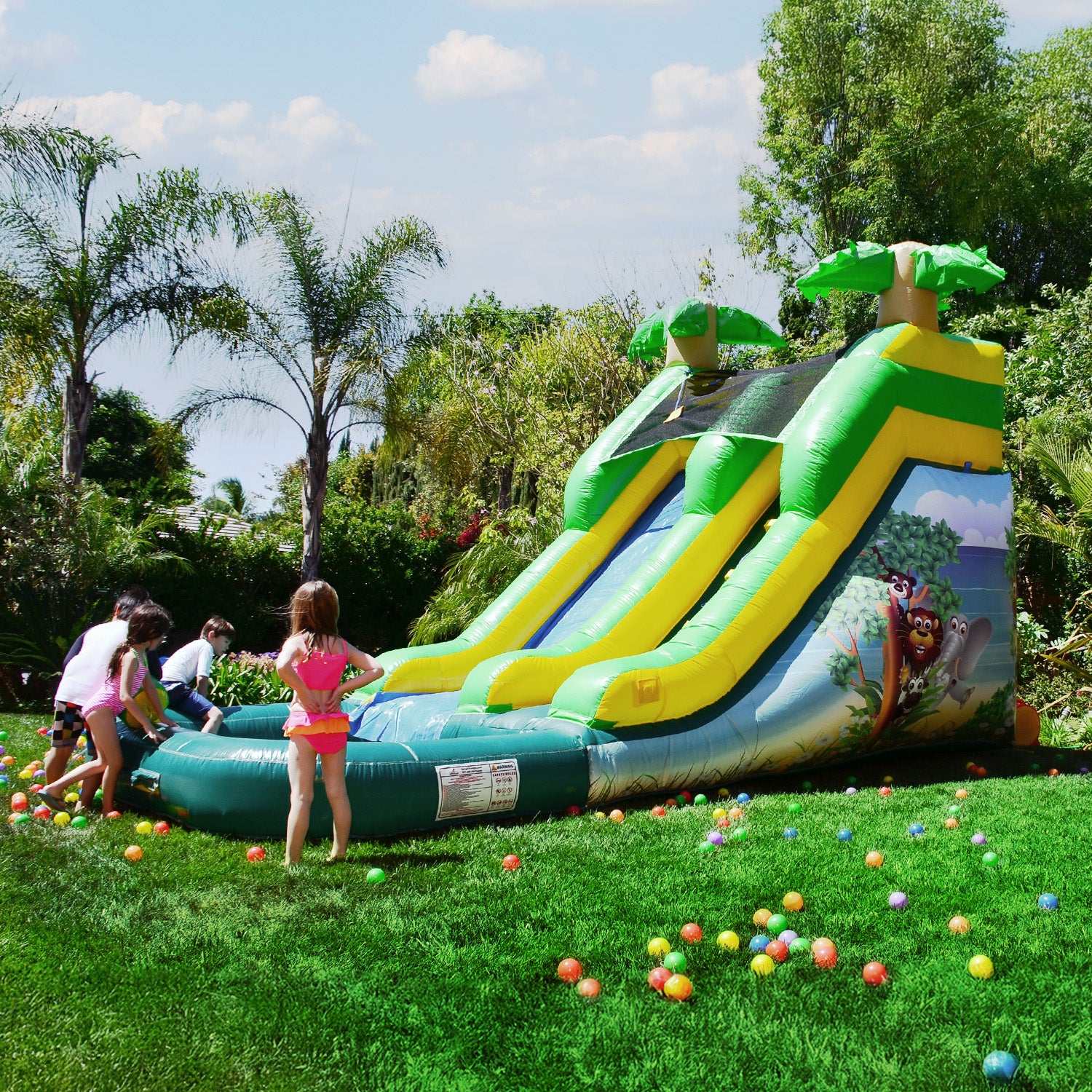
Giraffes, zebras, and a twelve-foot drop built for the smallest riders
Call for Availability
View details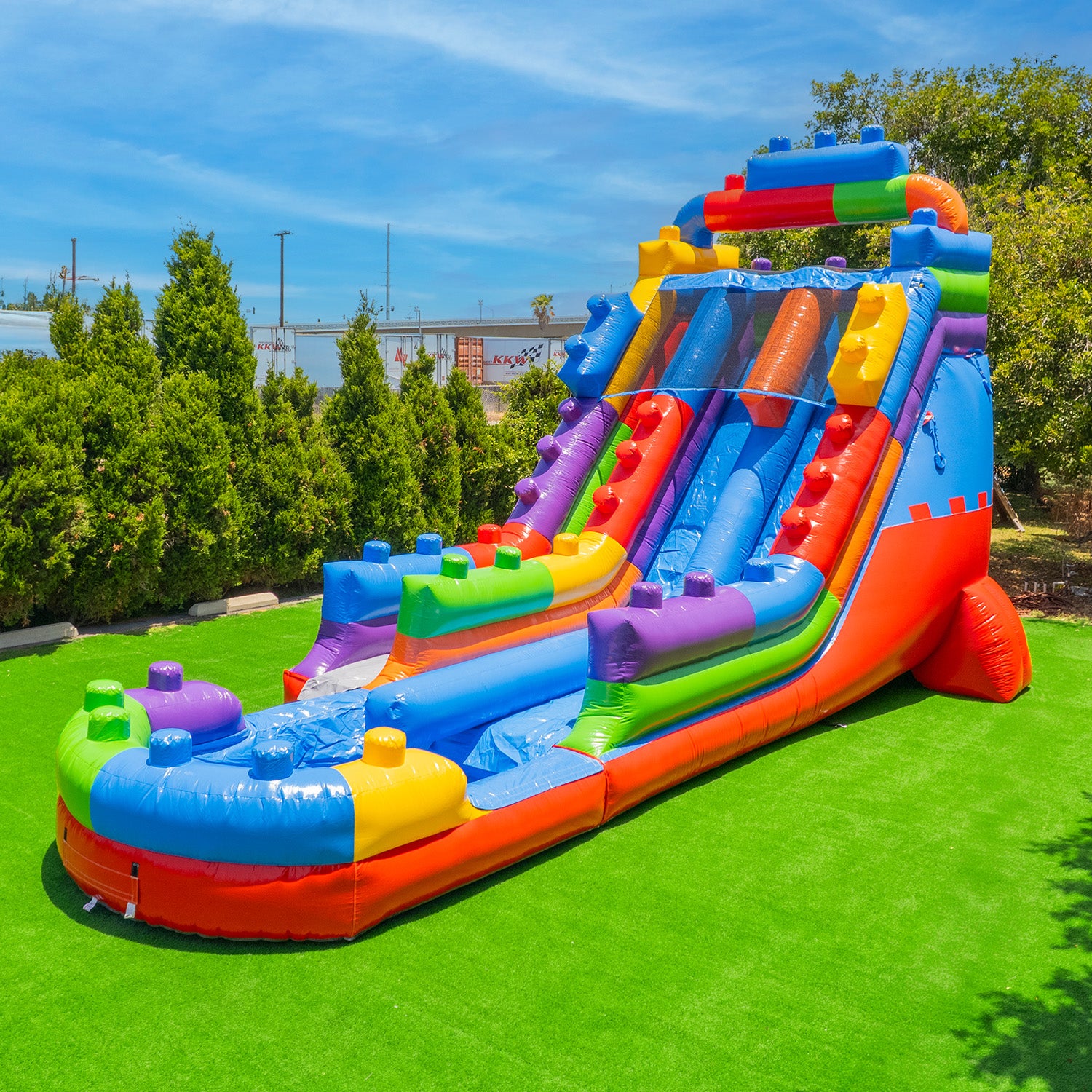
Nineteen feet, two lanes, and a deep pool — the flagship
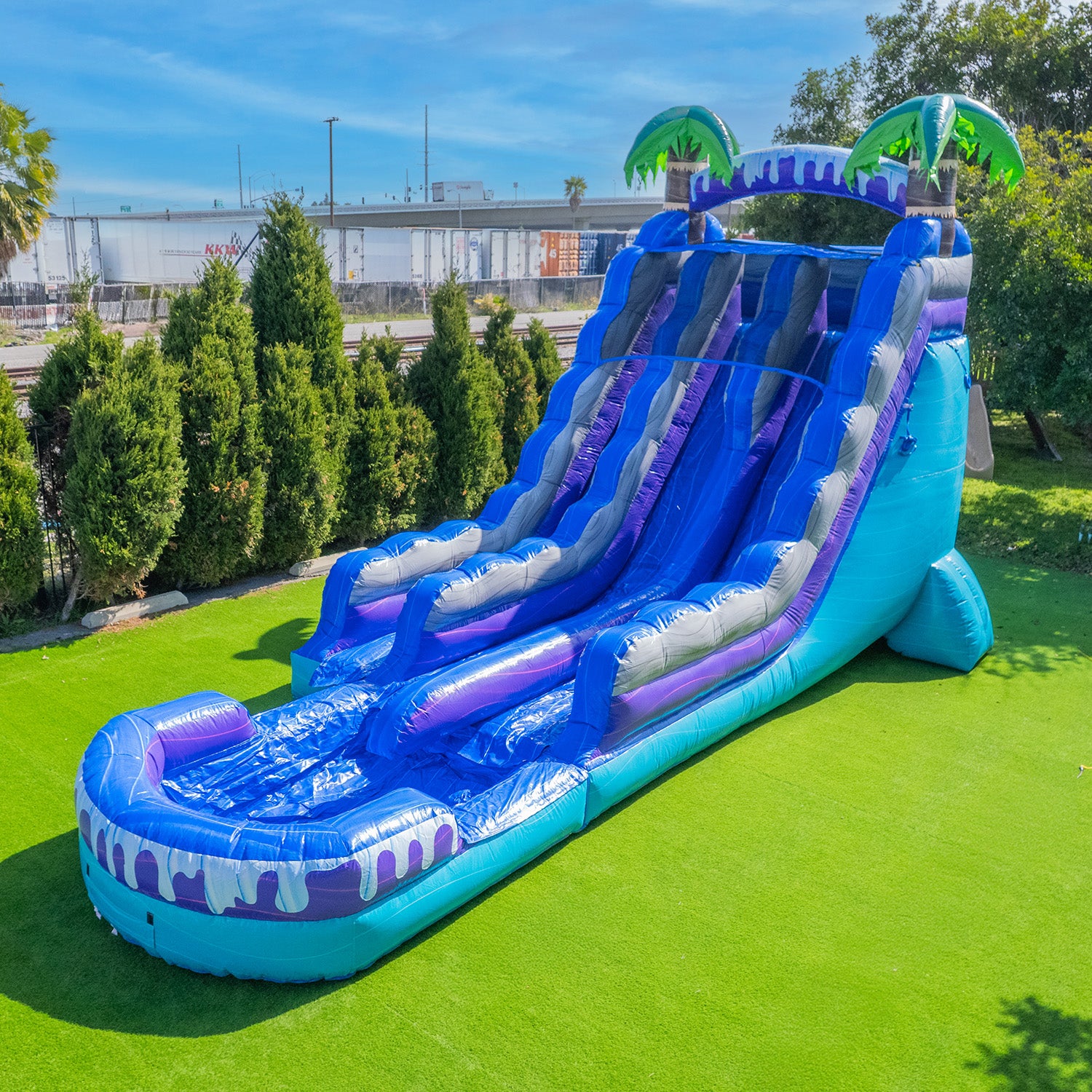
The flagship in tropical dress — same 19ft dual-lane frame, deep-sea artwork
Call for Availability
View details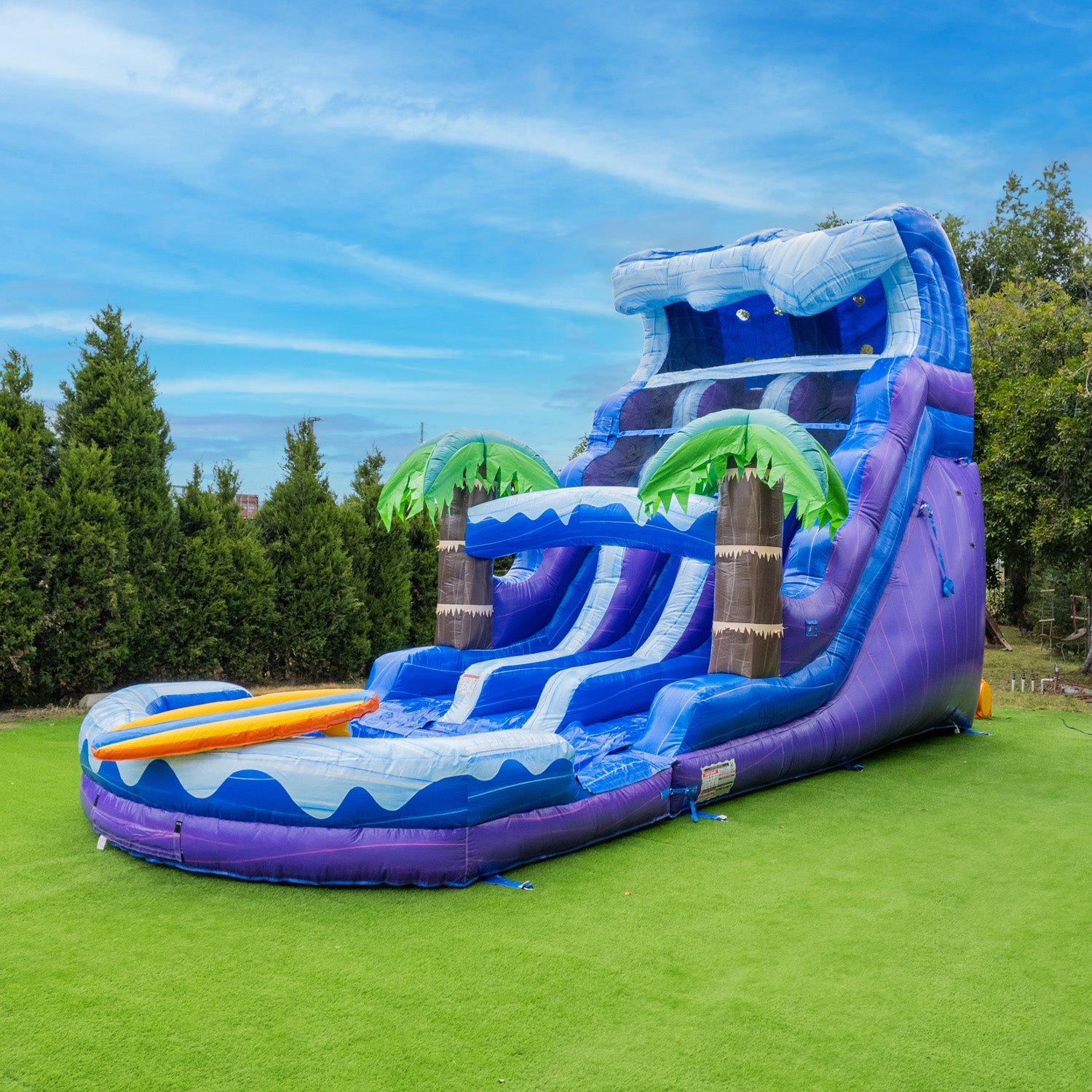
Dual lane, deep pool, and it all comes apart for dry season
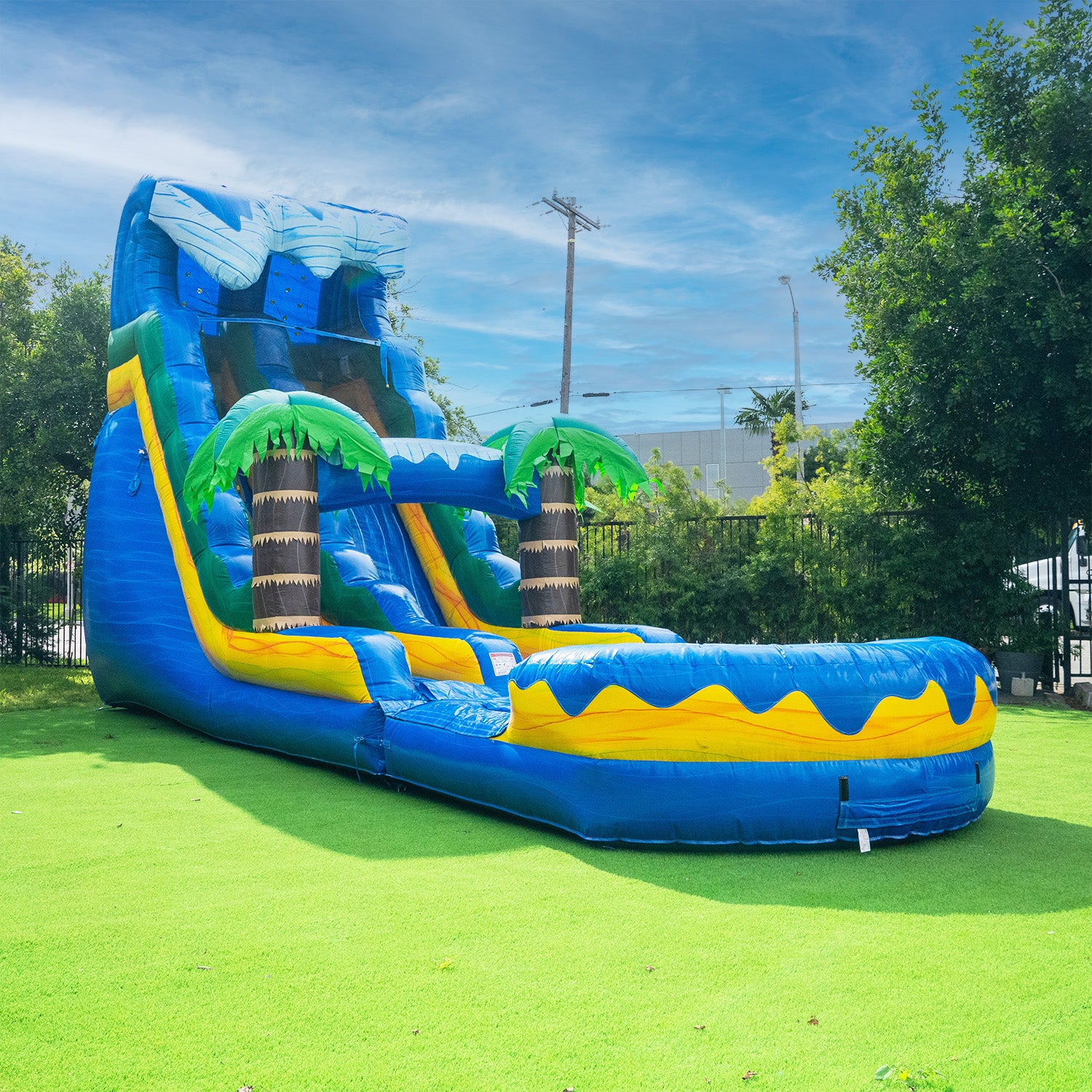
Maximum height, one wide lane, and a deep pool that detaches
Call for Availability
View details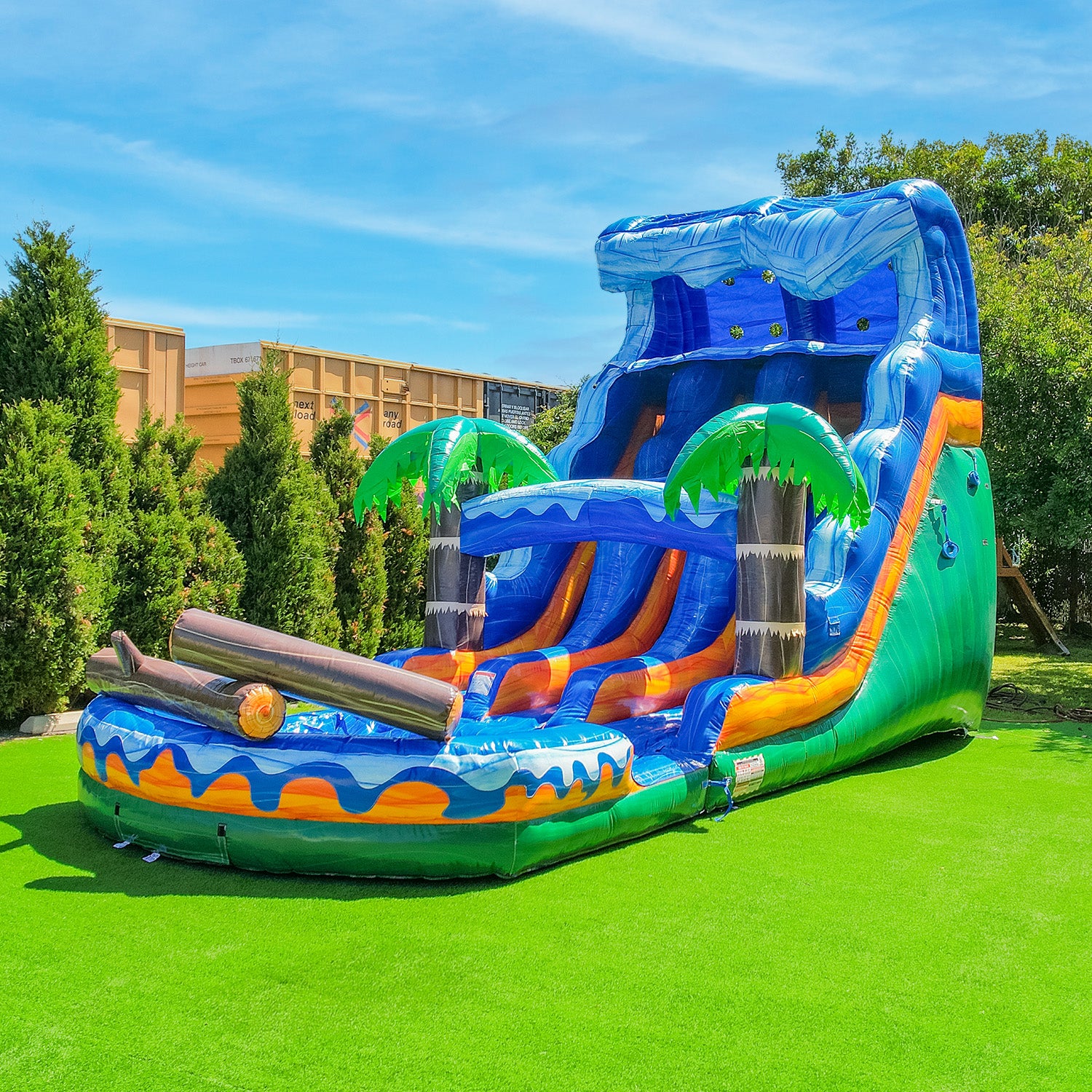
Waterfall theming on a seventeen-foot dual-lane frame
Call for Availability
View details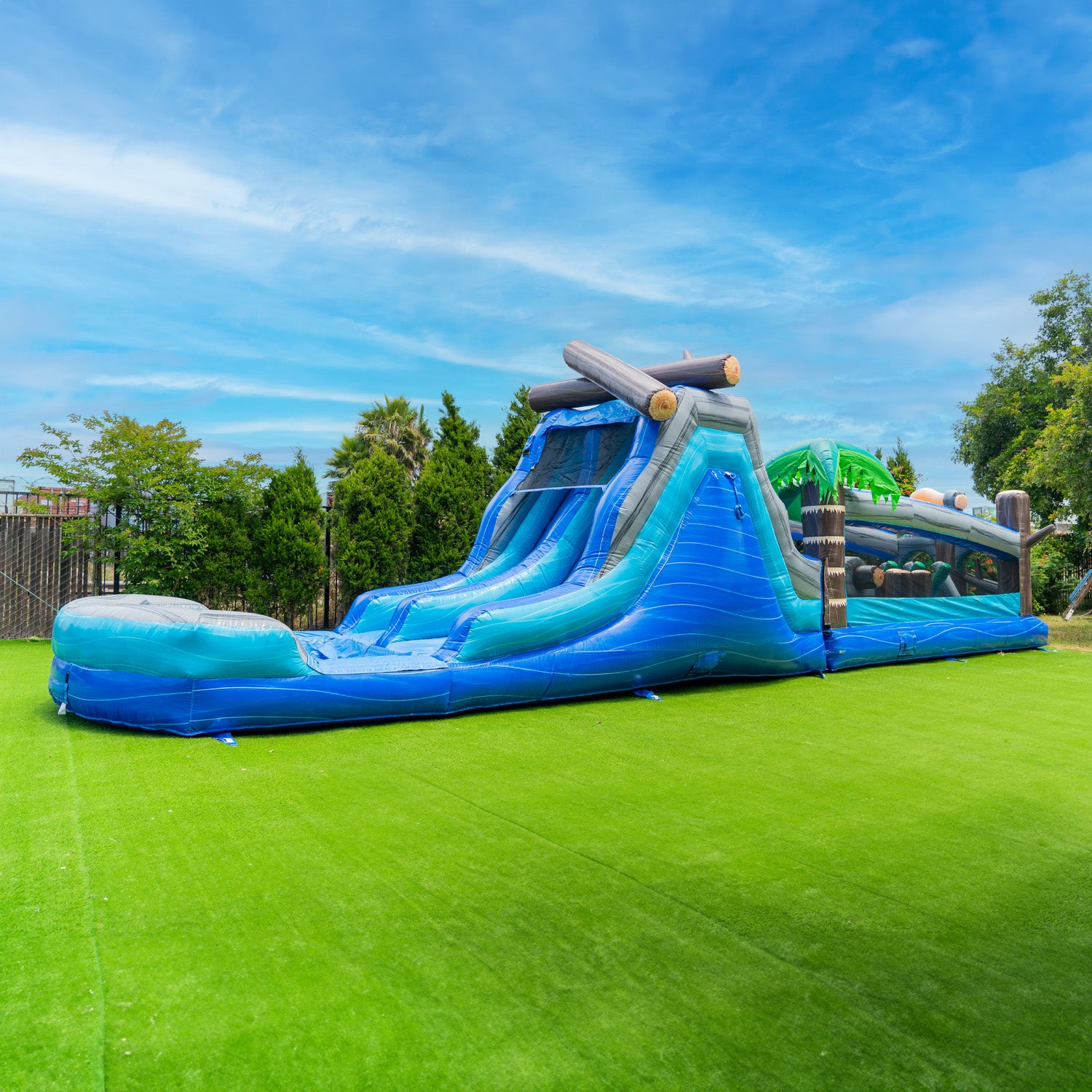
Forty-five feet of obstacles ending in a dual-lane slide and a deep pool
Call for Availability
View detailsThere are only four decisions that actually matter when you buy an inflatable water slide, and everything else is decoration. Height determines who will use it and whether it fits your site. Lane count determines throughput. Pool type determines how many months a year the slide earns its keep. Vinyl weight determines whether you are buying it once or buying it again in two summers. Get those four right and the theme is a matter of taste.
Height is the decision people get wrong most often, and they get it wrong in the same direction every time — they buy taller than their kids will use. A 19-foot slide is genuinely impressive and a genuinely long climb, and a six-year-old will do it four times and then go inside. A 13-foot slide gets ridden until dinner. Match the height to the youngest regular rider, not to the oldest, unless the oldest is the only one who matters.
Site constraints come next, and the constraint that disqualifies most yards is not lawn area — it is what is above the lawn. Every slide here lists a recommended clear footprint, but you also need unobstructed sky: tree canopy, gutters, floodlights, and overhead service drops all matter. Walk out and look up before you measure anything on the ground.
A single lane is wider and more forgiving. Riders who go down sideways, off-centre, or on their stomachs have room, and the slide feels roomier to a hesitant child. If your typical crowd is a handful of kids, a single lane is not a bottleneck and the second lane buys you nothing except a wider footprint and a higher price.
A dual lane changes the social dynamic rather than merely doubling capacity. Two lanes turn a queue into a race. Kids self-organise into head-to-head heats and the waiting stops feeling like waiting. The crossover point in practice is somewhere around eight to ten simultaneous riders — below that, single lane is the better buy; above it, dual lane is the difference between a slide that entertains for forty minutes and one that runs all afternoon.
An attached pool is a single inflated chamber continuous with the slide body. There is nothing to align, nothing to assemble, and — importantly — no detach seam, which is the joint that gets stressed every time a pool is fitted and removed and the first place a well-used slide starts to weep. Attached-pool units set up fastest, typically three to four minutes, and they are the more durable choice for a slide that will be used hard every weekend all summer.
A detachable pool buys you a second product. Take the pool off and the slide runs dry into a landing mat, which means indoor events, fall festivals, and school days when nobody wants to be soaked. For families that is two or three extra months of use each year; for rental operators it is a second listing at no extra inventory cost. The cost is one more assembly step and one more part to store.
Every slide on this page is built from 15oz commercial-grade PVC with quadruple-stitched seams. That is not a marketing line, it is the difference between a product with a decade in it and a product with a season. A big-box inflatable at a superficially similar price is typically 6 to 9oz PVC with double-stitched seams, engineered for roughly twenty uses before the seams start to go.
The cost comparison only makes sense over time. A cheaper slide replaced every second summer costs more across five years than a commercial unit bought once, and it fails at the least convenient moment — usually mid-party, usually at a seam. Commercial vinyl is also thicker underfoot, which changes how the lane feels: it does not stretch and thin out under a heavy rider the way light vinyl does.
The other half of longevity is not the vinyl at all, it is the drying routine. Vinyl put away damp grows mildew that etches the coating and voids most warranties. Twenty minutes of drying before the slide goes in the bag is what separates three seasons from ten, and it costs nothing.
These are constant-airflow inflatables. The blower runs continuously for the whole session — it is not a seal-and-forget product, and there is no configuration where you inflate it and unplug. Every slide here ships with a blower sized for that unit, so you are not buying air separately.
The larger units — anything nineteen feet, and the bigger combos and obstacle courses — need two or more blowers, and those blowers need separate circuits. Two outlets on the same circuit is the single most common reason a large inflatable fails to stand up on delivery day, and it is entirely avoidable with five minutes of planning beforehand.
Call (555) 010-2025 and we will talk it through — or read the full inflatable water slide buyer’s guide, which covers height, lanes, pool type and vinyl weight in order.
Common questions
Most suburban backyards comfortably take a 13ft to 16ft slide. Check the recommended clear footprint on each product page and, more importantly, check overhead clearance — tree branches and service drops disqualify more sites than lawn size does.
Yes. Every slide ships with a blower sized for that unit, along with stakes, tether ropes, a storage bag, and a repair patch kit.
Three to five minutes for a single-lane slide with an attached pool. Add a few minutes for a detachable pool, and budget ten to fifteen for the 19ft units and large combos.
Grass is preferable because you can stake it. On a hard surface you need sandbags or ballast instead of stakes, and a protective tarp underneath. Never operate an unanchored inflatable.
Keep browsing