

Setup & Safety
What Size Blower Do I Need for My Inflatable Water Slide?
Horsepower is the number on the box; CFM is the number that matters. How to size a blower, and why two outlets on one circuit is the most common setup failure.
By The WaterSlides4Kids Team · · Updated · 7 min read
Nearly every inflatable blower is sold by horsepower. Almost none of the useful information is in that number.
If you are replacing a blower, buying a spare, or trying to work out why a unit will not stand up properly, this is the article. It is short on theory and long on the two or three things that actually go wrong.
These are constant-airflow inflatables
Start here, because it surprises people who have only owned pool toys.
An inflatable water slide is not sealed. It leaks air continuously and deliberately, through the seams and through the fabric itself. The blower runs for the entire session to replace what escapes. There is no inflate-and-unplug mode, and switching the blower off means the slide comes down within a minute or two — with riders on it, if you are careless about when.
This is by design. A constant-airflow structure is far safer than a sealed one: a puncture causes a gradual sag rather than a sudden collapse, which gives you time to get everyone off.
Practical consequence: the blower must be powered for the whole time the slide is in use, and you should never leave a running unit unattended.
CFM is the number that matters
CFM — cubic feet per minute — is the volume of air a blower actually moves. That is what holds the structure up.
Horsepower measures the motor's power draw, not its output. Two 1.5 HP blowers from different manufacturers can move meaningfully different volumes of air depending on impeller design and housing efficiency. Buying on horsepower alone is how people end up with a unit that looks inflated but feels soft underfoot.
Match the CFM specified for your slide. It is on the manufacturer's plate on the blower that shipped with the unit, and in the documentation in the carton. If you are replacing a blower, that plate is your spec — not the horsepower on the box of the replacement.
The second spec worth checking is static pressure, quoted in inches of water column. Taller structures need more of it, because the blower has to hold a column of air up against gravity. A blower with adequate CFM but insufficient static pressure will fill a 13-foot slide fine and struggle with a 19-footer.
Rough guide by unit size
Your unit's documentation governs. This is for orientation only.
| Unit | Typical blower requirement | | --- | --- | | 12–13 ft single lane | 1 × 1 HP | | 15–16 ft single lane | 1 × 1.5 HP | | 13–15 ft dual lane | 1 × 1.5 HP | | 26 ft wet/dry combo | 1 × 1.5 HP | | 17 ft dual lane | 2 × 1.5 HP | | 30 ft combo | 2 × 1.5 HP | | 19 ft dual lane | 2 × 1.5 HP | | 45 ft obstacle course | 2–3 blowers |
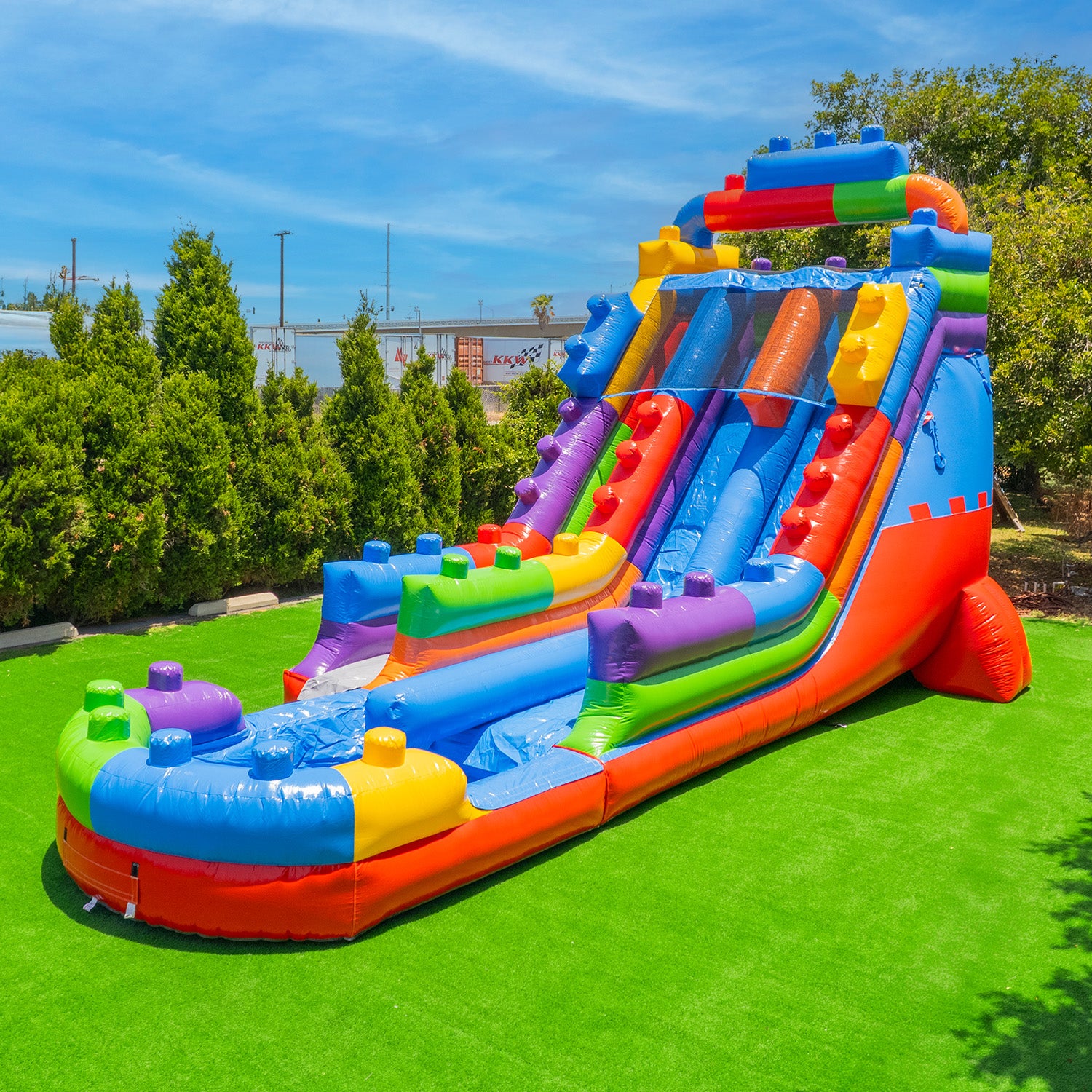
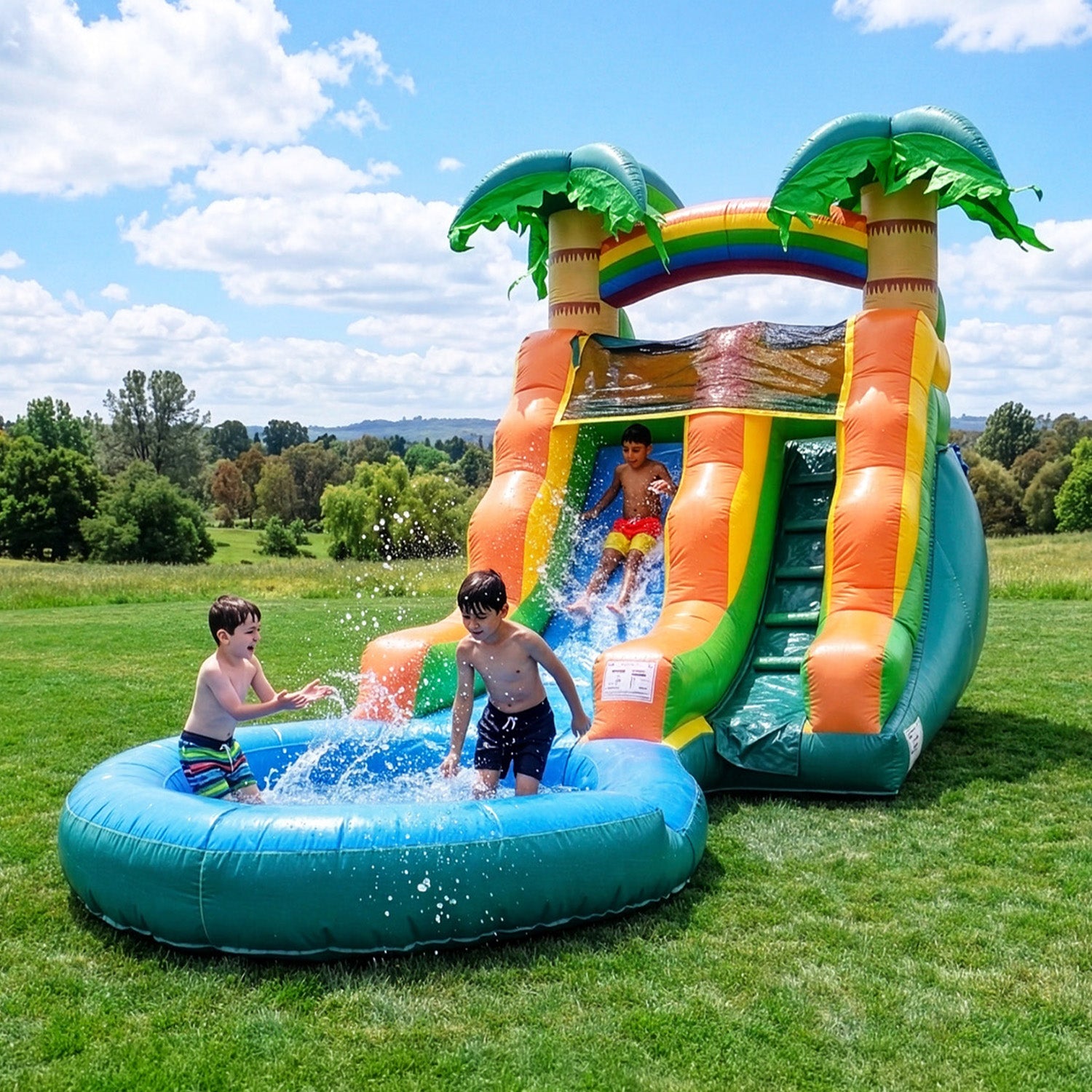
Every slide we sell ships with a blower sized for it, so this only becomes your problem when something fails or you want a spare. The 13' Summer Breeze runs on a single 1 HP unit; the 19' Block Party needs two.
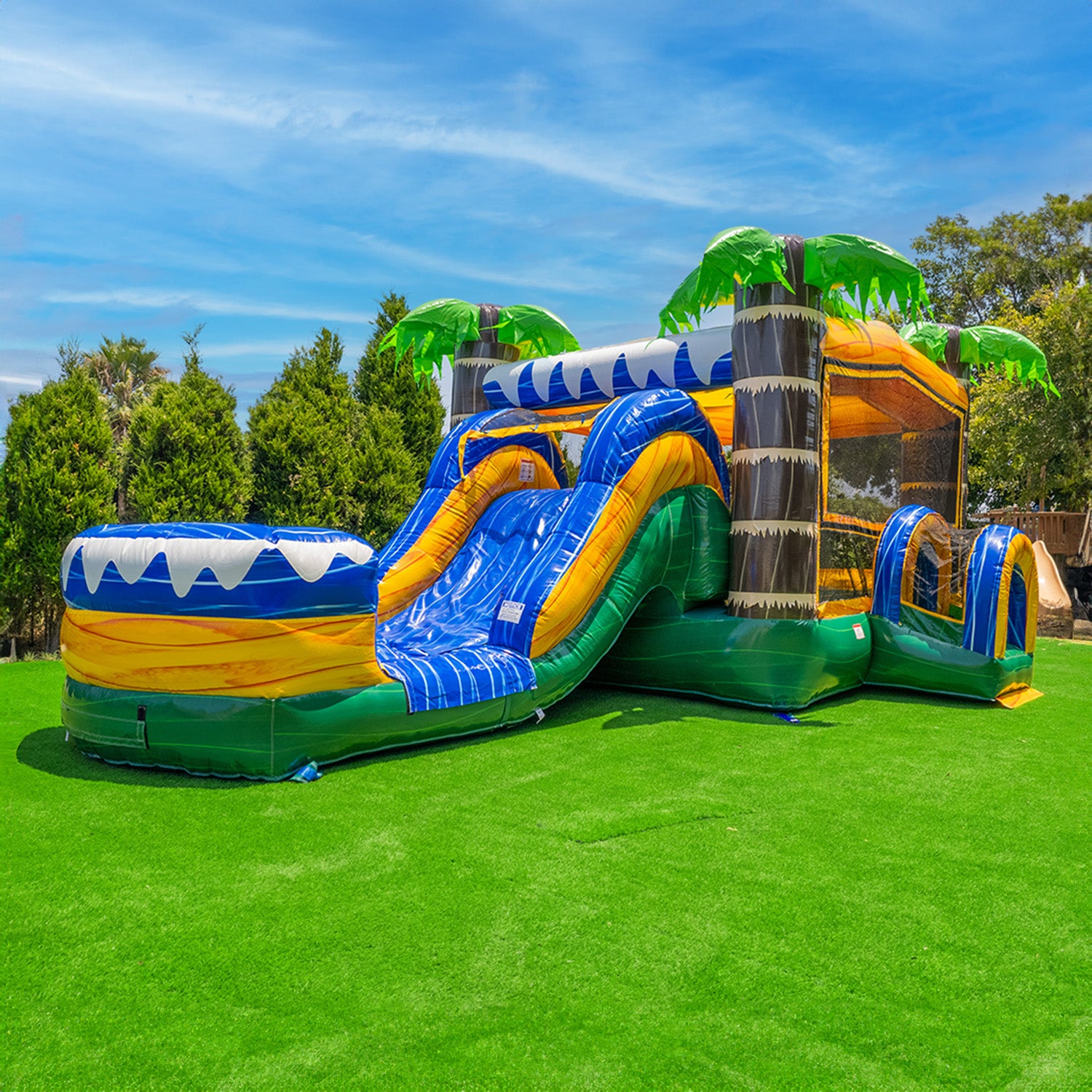
One genuinely useful thing about the smaller combos: the 26' Tropical Ocean combo delivers a bounce chamber, climbing wall, slide and pool on a single blower, which means one circuit and one thing to carry. That is a real advantage over the 30-foot combos for anyone setting up alone.
The mistake that ruins delivery day
Here it is, plainly:
Two blowers need two separate circuits. Not two outlets on the same circuit.
This is the single most common reason a large inflatable fails to stand up on site, and it is entirely avoidable. Two 1.5 HP blowers pull roughly 20 amps combined at startup. A standard 15-amp household circuit will trip, usually about ninety seconds in, usually while somebody is holding a hose and wondering what went wrong.
Outlets in the same room are frequently on the same circuit. Outlets on opposite sides of a house usually are not, but "usually" is doing a lot of work there. If you are setting up somewhere unfamiliar, ask which circuits the outlets are on — or find the breaker panel and check.
For events at parks and schools, ask the venue about power before you accept the booking. "There's an outlet by the pavilion" is not the same as "there are two independent 15-amp circuits within a hundred feet."
Extension cords: gauge, not length
If you must use an extension cord — and everyone does — the gauge matters more than people expect.
Thin cords cause voltage drop over distance. The motor compensates by drawing more current, runs hotter, moves less air, and dies early. A blower on an underrated cord can look like it is running fine while delivering noticeably less pressure.
- Use 12-gauge cord. Not 16-gauge, which is what most household extension cords are.
- Keep runs as short as you practically can. Under 50 feet is comfortable; beyond 100 feet you are asking for trouble regardless of gauge.
- Never daisy-chain cords. Each connection is another voltage drop and another failure point.
- Use outdoor-rated cord with a GFCI, because you are running electricity next to several hundred gallons of water.
Buying a good 12-gauge outdoor cord costs perhaps $60 and prevents both the soft-slide problem and the burnt-out-blower problem.
Diagnosing a soft slide
If the unit is up but does not feel firm:
- Check the deflation zips. Every inflatable has zipped deflation panels for packing down. An unzipped or partly-open panel is the most common cause of a soft structure and takes ten seconds to rule out.
- Check the blower tube connection. The tube should be pulled tight over the blower outlet and strapped. A loose collar dumps a surprising amount of air.
- Check the intake is clear. Blowers pull air through a screened intake. Grass clippings, a towel, or a bag pressed against it will starve the motor.
- Check your extension cord — gauge and length, as above.
- Check for an actual leak. Listen along the seams. A significant tear is audible.
- Only then suspect the blower.
Also worth knowing: a slide will feel softer with several riders on it than empty. That is normal. It should not feel like it is sagging under one.
Looking after the blower
Blowers are simple and last a long time if you treat them reasonably.
- Keep it dry. It is the one part of the setup that must not get wet. Site it away from the splash zone, on something that keeps it out of standing water, and never let a hose run near it.
- Keep the intake clear. Do not set it down in long grass or leaf litter.
- Let it cool before packing. Motors run hot; sealing a hot blower in a bag is unkind to it.
- Store it dry and indoors. Same rule as the vinyl.
- Check the cord for nicks each season. Damaged cord near water is a genuine hazard, not a cosmetic issue.
Noise
Blowers are loud — meaningfully louder than most people expect, comparable to a shop vacuum running continuously. This surprises people setting up in a small garden with neighbours close by, and it is worth thinking about for evening events.
You cannot make it quiet, but you can site the blower on the far side of the unit from where the adults will be sitting, which helps more than it sounds like it should.
Safety points that are not optional
- Never run the blower with the slide unanchored. Stakes on grass, ballast on hard surfaces, every anchor point, every time.
- Never leave a running inflatable unattended. Constant-airflow means constant supervision.
- Shut down and deflate before weather arrives, not during. Our safety checklist covers wind limits and what to do when conditions change.
- Use a GFCI-protected outlet. Electricity plus water plus children is the one combination not to improvise around.
The short version
Match CFM, not horsepower. Give each blower its own circuit. Use 12-gauge outdoor cord and keep the run short. Keep the blower dry and its intake clear. And check the deflation zips before you blame the motor.
Every slide we sell includes a blower sized for it, so most owners never have to think about any of this. If you are choosing a unit and want to keep the power setup simple, look at anything in the 15–16 ft bracket or the 26-foot combos — all single-blower units on one household circuit.
Quick answers
Frequently asked
What size blower do I need for an inflatable water slide?
Match the CFM rating specified for your unit rather than the horsepower. Most 13–16ft slides run on a single 1–1.5 HP blower; 19ft units and large combos need two.
Can I run two blowers on one circuit?
No. Two blowers need two separate circuits. Sharing one is the single most common reason a large inflatable fails to stand up on delivery day.
Does the blower run the whole time?
Yes. These are constant-airflow inflatables — the blower stays on for the entire session. There is no inflate-and-unplug mode.
Mentioned in this guide
Slides Worth a Look
- In Stock
Block Party 19' Dual Lane Water Slide with Attached Deep Pool
Nineteen feet, two lanes, and a deep pool — the flagship
 In Stock
Tropical Ocean Wet & Dry Slide Combo with Attached Splash Pool
A 26-foot combo that fits yards the 30-footers do not
 In StockBest Value
13' Summer Breeze Water Slide with Pool
Commercial vinyl at a big-box price — the entry point that is not a compromise
About the author
The WaterSlides4Kids Team
We sell commercial-grade inflatable water slides, which means we spend a lot of time answering the same questions about vinyl weight, blower sizing, yard measurements, and what actually breaks first. These guides are those answers, written down.
More about usKeep reading
More Guides
- Do You Need a Permit for an Inflatable Water Slide? US State-by-State OverviewWhere permits typically apply, how private backyard use usually differs from commercial operation, and how to check your own jurisdiction properly.
- How to Clean, Dry, and Store an Inflatable Water Slide So It Lasts 10 YearsTwenty minutes of drying is the difference between three seasons and ten. The full end-of-day routine, plus mildew rescue and off-season storage.
- Attached Pool vs. Detachable Pool Water Slides: Pros, Cons, and CleanupOne gives you two products from one purchase. The other removes the joint that fails first. How to choose, and what each means for setup and cleanup.